Artificial superintelligence (ASI) is a hypothetical future state of AI where intelligent machines surpass human cognitive abilities in all aspects. Think of it as a brainchild of science fiction, a sentient AI with god-like intellect that can solve problems, create art, and even write its own symphonies, all beyond the wildest dreams of any human....
Generative Artificial Intelligence (Generative AI) represents acutting-edge field within the broader spectrum of artificial intelligence. Unlike traditional AI models that focus on classification or prediction tasks, generative models are designed to create new, original content. This transformative technology has rapidly evolved in recent years, demonstrating its potential across various domains such as image generation, text synthesis, and even music composition. Generative AI, a subfield of artificial intelligence, has emerged as a transformative force, blurring the lines between human and machine creativity. Unlike traditional AI models that focus on analyzing and classifying data, generative AI takes a leap forward, venturing into the realm of content creation. In this article, we will delve into the intricacies of Generative AI, exploring its underlying principles, applications, challenges, and the impact it has on our technological landscape.
What is Generative AI?
Generative AI refers to a category of artificial intelligence that focuses on creating or generating new content, data, or information rather than just analyzing or processing existing data. Unlike traditional AI systems that operate based on predefined rules or explicit instructions, generative AI employs advanced algorithms, often based on neural networks, to learn patterns from large datasets and generate novel outputs.
One key aspect of generative AI is its ability to produce content that was not explicitly present in the training data. This includes generating realistic images, text, music, or other forms of creative output. Notable examples of generative AI include language models like GPT-3 (Generative Pre-trained Transformer 3) and image generation models like DALL-E, Stable Diffusion.
Imagine a world where you can conjure up new ideas, not just consume existing ones. Generative AI empowers you to do just that. It’s a type of AI that can generate entirely new content, from text and images to music and code. Think of it as a digital artist, a tireless composer, or an inventive writer, fueled by data and algorithms.
Generative AI can be used in various applications, such as content creation, art generation, language translation, and even in simulating realistic environments for virtual reality. However, ethical considerations, such as the potential for misuse, bias in generated content, and the need for responsible deployment, are crucial aspects that researchers and developers must address as generative AI continues to advance.
How does Generative AI work?
Generative AI operates on the principles of machine learning, particularly using neural networks, to generate new and often realistic content. The underlying mechanism can vary based on the specific architecture or model being employed, but here’s a general overview of how generative AI typically works:
Data Collection and Preprocessing:
Generative AI models require large datasets to learn patterns and features. This data could be anything from images and text to audio or other forms of information.
The data is preprocessed to ensure that it is in a suitable format for training. This may involve tasks like normalization, cleaning, and encoding.
Architecture Choice:
Generative AI models often use neural networks, with specific architectures designed for different types of data and tasks. Common architectures include Variational Autoencoders (VAEs), Generative Adversarial Networks (GANs), and Transformer-based models like GPT (Generative Pre-trained Transformer).
Training:
During the training phase, the model is exposed to the prepared dataset. The neural network learns to identify patterns, relationships, and features within the data.
For GANs, there are two main components: a generator and a discriminator. The generator creates new content, and the discriminator evaluates how realistic that content is. The two components are in a continual feedback loop, with the generator improving its output to fool the discriminator.
Loss Function:
A loss function is used to quantify the difference between the generated output and the real data. The model adjusts its parameters to minimize this loss, gradually improving its ability to generate realistic content.
Fine-Tuning:
Depending on the architecture, there may be additional fine-tuning steps to enhance the model’s performance on specific tasks. This can involve adjusting hyperparameters, modifying the architecture, or employing transfer learning from pre-trained models.
Generation:
Once trained, the generative AI model can produce new content by taking random inputs or following specific instructions. For example, in language models like GPT, providing a prompt results in the model generating coherent and contextually relevant text.
Ethical Considerations:
Developers need to be mindful of potential biases in the training data and the generated content. Ethical considerations, responsible deployment, and addressing issues like content manipulation are crucial aspects of generative AI development.
Generative AI has found applications in various fields, including art, content creation, language translation, and more. However, continuous research is needed to refine models and address ethical concerns associated with their use.
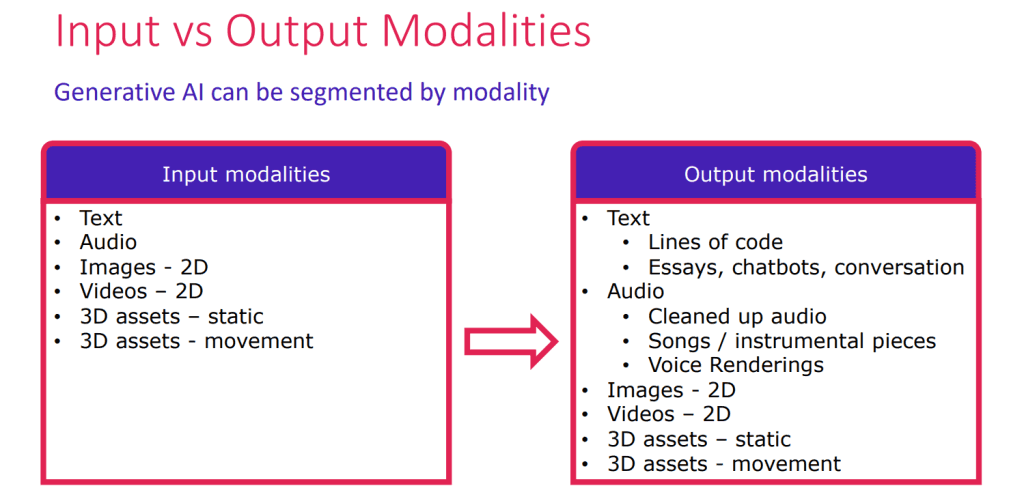
What is a modality in Generative AI?
In the context of Generative Artificial Intelligence (Generative AI) and machine learning, the term “modality” refers to a particular mode or type of data or information. It is essentially a way in which information is presented or represented. Different modalities represent distinct types of data, and they can include various forms such as:
Text Modality:
Involves textual data, such as written language or documents.
Image Modality:
Involves visual data, such as pictures, photographs, or other graphical representations.
Audio Modality:
Involves sound data, including speech, music, or other auditory information.
Video Modality:
Involves sequences of images and audio, creating a moving visual representation.
Sensor Modality:
Involves data from sensors, such as those measuring temperature, pressure, or other physical quantities.
Modalities in Multimodal Systems:
When different types of data are combined, it is referred to as a multimodal system. For example, a system that processes both text and images is dealing with multiple modalities.
In the context of Generative AI models, the term “multimodal” is often used when models are designed to handle and integrate information from multiple modalities. For instance, a multimodal model might be capable of understanding both text and images, allowing it to perform tasks that involve a combination of textual and visual information.
Understanding and processing information from different modalities are crucial in various Generative AI applications, such as natural language processing, computer vision, and audio analysis. Developing models that can effectively handle multiple modalities is an active area of research in the field of artificial intelligence.
Notable Players: Innovators in Generative AI
While cutting-edge algorithms and code underpin the remarkable advances in generative AI, creativity comes in many forms. Let’s explore two inspiring examples pushing the boundaries beyond lines of code and into the realms of art and data expression.
DALL-E 2 & Stable Diffusion: Titans of Text-to-Image using Generative AI
These two models have sparked a creative revolution, transforming mere words into vivid, photorealistic images. DALL-E 2’s uncanny ability to translate complex concepts into visual masterpieces, from surreal landscapes to hyperrealistic portraits, has garnered widespread acclaim. Meanwhile, Stable Diffusion democratizes the process, offering an open-source alternative that empowers countless artists and enthusiasts to explore the endless possibilities of text-to-image generation.
Refik Anadol Studios: Painting with Data using Generative AI
Refik Anadol Studios stands out as a pioneer in utilizing generative AI to create a new artform. By harnessing data as pigments, the studio explores the intersection of data and aesthetics, giving rise to mesmerizing visual experiences. Their work exemplifies the transformative potential of generative AI in shaping entirely novel and immersive forms of artistic expression.
Redefining the meaning of “pixel art,” Refik Anadol Studios weaves magic with data, breathing life into numbers and statistics. Their immersive installations transform massive datasets like weather patterns or brain activity into mesmerizing symphonies of light and movement. Each project feels like a portal into the invisible, prompting viewers to contemplate the hidden beauty and poetry within the raw data that surrounds us.
Generative AI Case Study: Video Synopsis Generator
In the age of information overload, where video content bombards us like an endless scroll, finding time to sift through hours of footage can feel like an Olympic feat. Enter the Video Synopsis Generator – a technological knight in shining armor poised to rescue us from the clutches of indecision and time scarcity.
A Video Synopsis Generator is an innovative technology that condenses and summarizes lengthy video footage into a concise and comprehensive visual summary. This tool is designed to efficiently process and distill the essential content from extended video sequences, providing a quick overview of the key events, objects, and activities captured in the footage.
https://www.youtube.com/watch?v=yjPv2ltMt-E
The primary goal of a Video Synopsis Generator is to save time and enhance efficiency in video analysis. By automatically extracting salient information from hours of video content, it allows users to rapidly grasp the core elements without the need to watch the entire footage. This is particularly valuable in surveillance, forensic investigations, and content review scenarios where large volumes of video data need to be analyzed promptly.
The process involves the use of advanced computer vision and machine learning algorithms. These algorithms identify important scenes, objects, and actions within the video, creating a condensed visual representation often in the form of a timeline or a series of keyframes. The resulting video synopsis provides a snapshot of the entire video, highlighting critical moments and aiding in the identification of relevant information.
Applications of Video Synopsis Generators extend beyond security and law enforcement. They can be beneficial in media and entertainment for quick content review, in research for analyzing experiments or observations, and in various industries for monitoring processes and activities.
The efficiency and accuracy of Video Synopsis Generators contribute to improved decision-making by enabling users to quickly assess the content of extensive video archives. As technology continues to advance, these generators are likely to play a crucial role in streamlining video analysis workflows and making video content more accessible and manageable across different domains.
Anatomy of the video summarizer
From Video To Text Summary
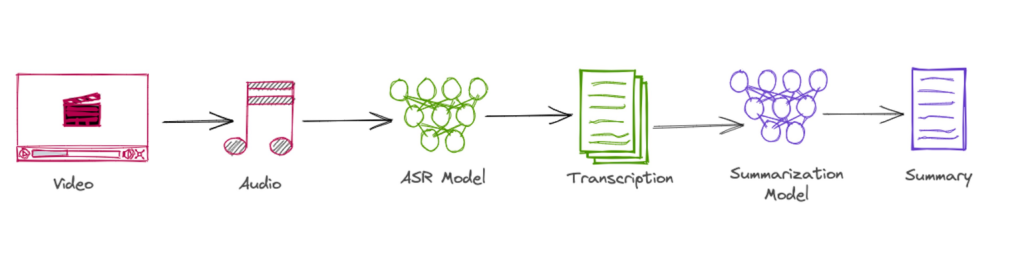
The Anatomy of the Video Summarizer delineates the intricate process through which raw video content transforms into a concise and informative text summary. This multi-step procedure involves the conversion of visual and auditory elements into a textual representation that captures the essence of the video’s content.
Video Input:
The process begins with the input of a video, which may contain a diverse array of scenes, objects, and actions. This raw visual data serves as the foundation for the subsequent steps in the summarization pipeline.
Audio Extraction:
The video’s audio component is extracted to preserve and utilize auditory cues present in the footage. This step is crucial for a comprehensive understanding of the content, as it enables the system to capture spoken words, ambient sounds, and other audio elements.
Automatic Speech Recognition (ASR) Model:
The extracted audio undergoes analysis by an Automatic Speech Recognition (ASR) model. This sophisticated technology translates spoken language into text, converting the auditory information within the video into a textual format that can be further processed.
Transcription:
The output of the ASR model results in a transcription—a textual representation of the spoken words and other audio elements present in the video. This transcription acts as a bridge between the audio and summarization phases, providing a structured format for subsequent analysis.
Summarization Algorithm:
The transcription text is then fed into a summarization algorithm designed to distill the most pertinent information from the entire video content. This algorithm assesses the importance of various segments, considering factors such as keywords, sentiments, and contextual relevance.
Text Summary Output:
The final output of the video summarizer is a concise text summary that encapsulates the key elements of the video. This summary serves as a condensed representation of the original content, providing users with an efficient and informative overview without the need to watch the entire video.
This comprehensive process, from video to text summary, showcases the synergy of advanced technologies such as ASR and summarization algorithms. The Video Summarizer not only accelerates content review but also makes vast amounts of video data more accessible and manageable, finding applications in diverse fields such as research, media, and surveillance.
Extract audio from video
The process of extracting audio from a video involves utilizing specialized tools, such as FFMPEG, to separate the audio component from the visual content. This extraction facilitates the independent use of audio data or further analysis. Here’s an overview of the steps involved:
FFMPEG – Multimedia Handling Suite
FFMPEG stands out as a comprehensive suite of libraries and programs designed for handling a variety of multimedia files, including video and audio. It provides a versatile set of tools for manipulating, converting, and processing multimedia content.
Command-Line Tool
FFMPEG is primarily a command-line tool, requiring users to input specific commands for desired operations. This command-line interface allows for flexibility and customization in handling multimedia files.
Python Integration
While FFMPEG is a command-line tool, it can seamlessly integrate with Python environments such as Jupyter notebooks. Using the exclamation mark (!) as a prefix in a Python cell allows for the execution of command-line instructions, making FFMPEG accessible and executable directly from Python notebooks.
Extraction Command
To extract audio from a video using FFMPEG, a command similar to the following can be employed in a Python notebook:
Python
!ffmpeg -i input.mp4 output.avi
This command specifies the input video file (input.mp4) and the desired output file format (output.avi).
Conversion Process
The -i flag in the command denotes the input file, and FFMPEG automatically recognizes the format based on the file extension. The extraction process separates the audio content from the video, producing a file in the specified output format.
Output
The result of the extraction process is a standalone audio file (output.avi in the given example), which can be further analyzed, processed, or used independently of the original video.
The ability to extract audio from a video using FFMPEG provides users with flexibility in working with multimedia content. Whether for audio analysis, editing, or other applications, this process enhances the versatility of multimedia data in various contexts, including programming environments like Python notebooks.
Automatic Speech Recognition (ASR)
ASR
Automatic Speech Recognition (ASR) is a technology that converts spoken language into written text. This process involves intricate algorithms and models designed to analyze audio signals and transcribe them into textual representations. Here’s an overview of the key components and steps involved in Automatic Speech Recognition:
Audio Input:
ASR begins with an audio input, typically in the form of spoken words or phrases. This audio can be sourced from various mediums, including recorded speech, live conversations, or any form of spoken communication.
Feature Extraction:
The audio signal undergoes feature extraction, a process where relevant characteristics, such as frequency components, are identified. Mel-frequency cepstral coefficients (MFCCs) are commonly used features in ASR systems.
Acoustic Modeling:
Acoustic models form a crucial part of ASR systems. These models are trained to associate acoustic features extracted from the audio signal with phonemes or sub-word units. Deep neural networks are often employed for this task, capturing complex patterns in the audio data.
Language Modeling:
Language models complement acoustic models by incorporating linguistic context. They help the system predict the most likely word sequences based on the audio input. N-gram models and neural language models contribute to this linguistic aspect.
Decoding:
During decoding, the ASR system aligns the acoustic and language models to find the most probable word sequence that corresponds to the input audio. Various algorithms, such as Viterbi decoding, are applied to determine the optimal transcription.
Transcription Output:
The final output of the ASR process is a textual transcription of the spoken words in the input audio. This transcription can be in the form of raw text or a sequence of words, depending on the design of the ASR system.
Post-Processing (Optional):
In some cases, post-processing steps may be applied to refine the transcription. This could include language model-based corrections, context-aware adjustments, or other techniques to enhance the accuracy of the output.
ASR finds applications in various domains, including voice assistants, transcription services, voice-controlled systems, and accessibility tools. Its development has been greatly influenced by advancements in deep learning, leading to more robust and accurate speech recognition systems. The continuous improvement of ASR technology contributes to its widespread use in making spoken language accessible and actionable in diverse contexts.
Text summarization
Text summarization is a computational process that involves generating a concise and accurate summary of a given input text. Over time, the evolution of Natural Language Processing (NLP) architectures has played a significant role in enhancing the effectiveness of text summarization. Here’s an overview of the key aspects involved in text summarization:
Objective:
The primary objective of text summarization is to distill the essential information from a longer piece of text while preserving its core meaning. This is crucial for quickly conveying the key points without the need to read the entire document.
In the earlier stages of NLP, recurrent neural networks (RNNs) were commonly used for text summarization. However, RNNs had limitations in capturing long-range dependencies, affecting their ability to generate coherent and contextually rich summaries.
Modern Approach – Transformer-Based Models:
Modern NLP models, particularly transformer-based architectures like BERT (Bidirectional Encoder Representations from Transformers) and GPT (Generative Pre-trained Transformer), have demonstrated superior performance in text summarization. Transformers excel in capturing contextual relationships across words and have become the backbone of state-of-the-art NLP applications.
Specialized Summarization Models:
Summarization models are specialized language models that have been fine-tuned specifically for the task of summary generation. They leverage large datasets, such as CNN Dailymail and Amazon reviews, to learn the nuances of summarizing diverse content.
Training on Summarization Datasets:
To enhance their summarization capabilities, models undergo training on datasets containing pairs of original text and corresponding summaries. This process allows the model to learn how to distill crucial information and produce coherent and concise summaries.
Input Length Constraints:
Summarization models often have limitations on the length of the input they can effectively process. This constraint is typically expressed in terms of the number of tokens constituting the input. Managing input length is crucial for maintaining computational efficiency and model performance.
In short, text summarization has evolved from relying on RNNs to leveraging transformer-based models, leading to substantial improvements in the quality of generated summaries. These modern architectures, fine-tuned for summarization tasks, play a pivotal role in various applications, including content summarization, news aggregation, and information retrieval.
Tokenization
Tokenization
Tokenization is a fundamental process in Natural Language Processing (NLP) that involves breaking down a large body of text into smaller, more manageable units known as tokens. Tokens can represent individual words, phrases, or even entire sentences, depending on the level of granularity required for a particular NLP task. Here’s an overview of key aspects related to tokenization:
Definition:
Tokenization is the process of segmenting a continuous text into discrete units, or tokens. These tokens serve as the building blocks for subsequent analysis in NLP tasks.
Types of Tokens:
Tokens can take various forms, including individual words, phrases, or complete sentences. The choice of tokenization granularity depends on the specific requirements of the NLP application.
Word-Level Tokenization:
In word-level tokenization, the text is divided into individual words. Each word becomes a separate token, enabling the analysis of the text at the finest level of detail.
Phrase-Level Tokenization:
For certain tasks, tokenization may occur at the phrase level, where groups of words are treated as a single unit. This approach allows for the extraction of meaningful multi-word expressions.
Sentence-Level Tokenization:
In sentence-level tokenization, the text is segmented into complete sentences. Each sentence then becomes a distinct token, facilitating tasks that require understanding at the sentence level.
Purpose of Tokenization:
The primary purpose of tokenization is to make the text more manageable and easier to process for subsequent NLP tasks. Breaking down the text into smaller units simplifies the analysis and allows for a more granular understanding of the content.
Preprocessing Step:
Tokenization is often a crucial preprocessing step in NLP pipelines. It sets the foundation for tasks such as sentiment analysis, machine translation, and named entity recognition by organizing the input text into meaningful units.
Challenges in Tokenization:
Despite its importance, tokenization can pose challenges, especially in languages with complex word structures or in tasks requiring specialized tokenization rules. Techniques like subword tokenization and byte pair encoding (BPE) are employed to address these challenges.
Finally, tokenization is a pivotal process in NLP that transforms raw text into structured units, facilitating effective language analysis. Its versatility allows for adaptation to various levels of linguistic granularity, making it a fundamental step in the preprocessing of textual data for a wide range of NLP applications.
Conclusion
Generative AI represents a paradigm shift in artificial intelligence, empowering machines to create original content across various domains. As technology advances, it is crucial to address ethical concerns, biases, and challenges associated with this transformative field. The ongoing evolution of generative AI promises to reshape industries, foster innovation, and raise new questions about the intersection of technology and humanity. As we navigate this frontier of innovation, a thoughtful and ethical approach will be key to harnessing the full potential of generative AI for the benefit of society.
As generative AI technology continues to evolve, we can expect even more mind-blowing applications to emerge. Imagine a world where we can collaborate with AI to create art, design cities, and compose symphonies. The possibilities are truly endless.
Generative AI is not just a technological marvel; it’s a paradigm shift in how we think about creativity. It challenges us to redefine the boundaries between human and machine, and to embrace the possibilities of a future where imagination knows no bounds.
PyTorch, a popular open-source deep learning framework, has gained immense popularity for its flexibility, dynamic computational graph, and user-friendly design. One of its key components, TorchVision, extends PyTorch’s capabilities specifically for computer vision tasks. In this blog post, we will delve into the details of the TorchVision library, exploring its features, functionalities, and how it...
Welcome to the fascinating world of PyTorch, a powerful open-source machine learning framework built for Python. Whether you’re a seasoned AI practitioner or a curious newcomer, this comprehensive guide will take you on a journey through the key concepts, features, and applications of PyTorch, from its basic building blocks to the cutting-edge world of deep...
Deep learning has become synonymous with artificial intelligence advancements, powering everything from self-driving cars to medical diagnosis and even generating art. But what exactly is it, and how does it work? This blog post will be your one-stop guide to understanding the intricacies of deep learning, exploring its various types, its relationship with artificial neural networks, and ultimately showcasing its real-world impact through a fascinating case study: deep learning at Meta (formerly Facebook).
What is Deep Learning?
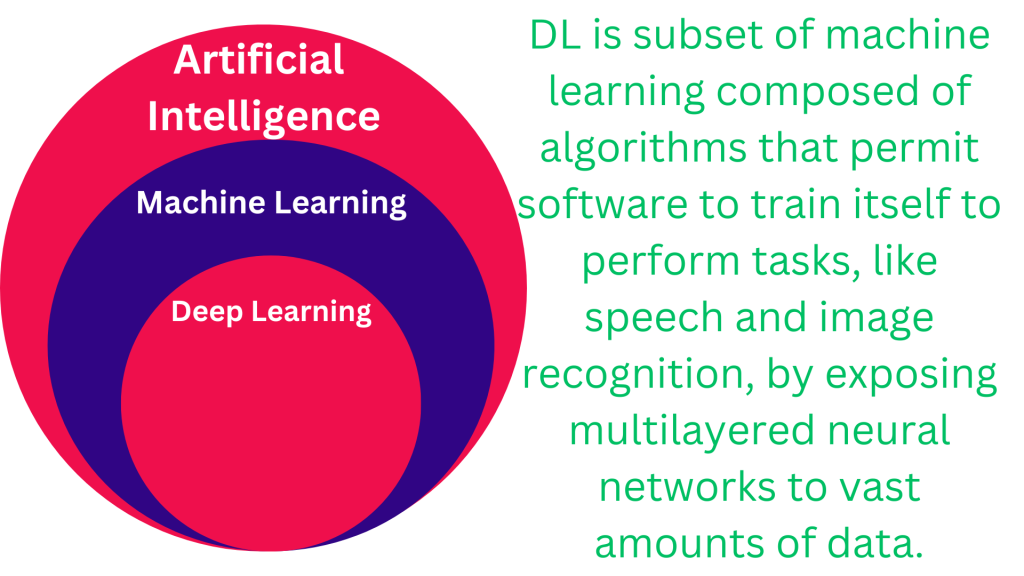
Deep learning is a subfield of machine learning that involves the development and training of artificial neural networks to perform tasks without explicit programming. It is inspired by the structure and function of the human brain, using neural networks with multiple layers (deep neural networks) to model and solve complex problems.
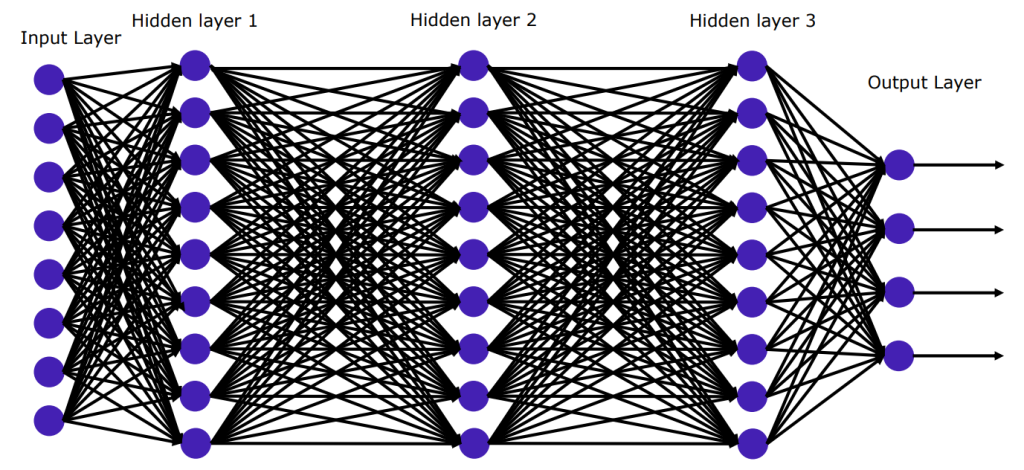
The basic building block of deep learning is the artificial neural network, which is composed of layers of interconnected nodes (neurons). These layers include an input layer, one or more hidden layers, and an output layer. Each connection between nodes has an associated weight, and the network learns by adjusting these weights based on the input data and the desired output.
Deep learning algorithms use a process called back propagation to iteratively adjust the weights in order to minimize the difference between the predicted output and the actual output. This learning process allows the neural network to automatically discover and learn relevant features from the input data, making it well-suited for tasks such as image and speech recognition, natural language processing, and many other complex problems.
Deep learning has shown remarkable success in various domains, including computer vision, speech recognition, natural language processing, and reinforcement learning. Some popular deep learning architectures include convolutional neural networks (CNNs) for image-related tasks, recurrent neural networks (RNNs) for sequential data, and transformers for natural language processing tasks.
The term “deep” in deep learning refers to the use of multiple layers in neural networks, which allows them to learn hierarchical representations of data. The depth of these networks enables them to automatically extract hierarchical features from raw input data, making them capable of learning intricate patterns and representations.
Types of Deep Learning
Here are some of the most common types of deep learning:
Convolutional Neural Networks (CNN):
Definition: Specifically designed for processing grid-like data, such as images. CNNs use convolutional layers to automatically and adaptively learn spatial hierarchies of features, making them well-suited for image recognition and computer vision tasks.
Primarily used for image recognition and computer vision tasks.
Employs convolutional layers to learn hierarchical feature representations.
Includes pooling layers for downsampling and reducing spatial dimensions.
Feedforward Neural Networks (FNN):
Definition: A type of neural network where information flows in one direction, from the input layer through one or more hidden layers to the output layer, without forming cycles. Commonly used for various supervised learning tasks.
Also known as Multilayer Perceptrons (MLP).
Consists of an input layer, one or more hidden layers, and an output layer.
Information flows in one direction, from input to output.
Recurrent Neural Networks (RNN):
Definition: Neural networks designed for sequence data, where information is passed from one step to the next. RNNs use recurrent connections to capture dependencies and relationships in sequential data, making them suitable for tasks like natural language processing and time series analysis.
Suited for sequence data, such as time series or natural language.
Utilizes recurrent connections to process sequential information.
Long Short-Term Memory (LSTM) and Gated Recurrent Unit (GRU) are popular RNN variants that address the vanishing gradient problem.
Generative Adversarial Networks (GAN):
Definition: A model framework where a generator network creates new data instances, and a discriminator network evaluates the authenticity of these instances. The two networks are trained adversarially, leading to the generation of realistic data, commonly used in image synthesis and generation.
Comprises a generator and a discriminator trained adversarially.
The generator creates new data instances, and the discriminator distinguishes between real and generated data.
Widely used for image generation, style transfer, and data augmentation.
Deep Reinforcement Learning (DRL):
Definition: A combination of deep learning and reinforcement learning. In DRL, agents learn to make decisions by interacting with an environment and receiving feedback in the form of rewards. This approach is commonly used in tasks like gaming, robotics, and autonomous systems.
Integrates deep learning with reinforcement learning.
Agents learn to make decisions by interacting with an environment and receiving feedback in the form of rewards.
Used in gaming, robotics, and autonomous systems.
Capsule Networks (CapsNets):
Definition: Proposed as an alternative to convolutional neural networks for handling hierarchical spatial relationships. Capsule networks use capsules to represent different properties of an object and their relationships, aiming to improve generalization and robustness in computer vision tasks.
Proposed as an improvement over CNNs for handling spatial hierarchies.
Capsules represent various properties of an object and their relationships.
Aimed at improving generalization and handling viewpoint variations.
Autoencoders:
Definition: Unsupervised learning models that consist of an encoder and a decoder. The encoder compresses input data into a lower-dimensional representation, and the decoder reconstructs the input from this representation. Autoencoders are used for tasks such as data compression and denoising.
Designed for unsupervised learning and dimensionality reduction.
Consists of an encoder that compresses input data and a decoder that reconstructs the input from the compressed representation.
Variational Autoencoders (VAEs) add a probabilistic component to generate diverse outputs.
Artificial Neural Networks and Deep Learning
Artificial Neural Networks (ANNs) derive inspiration from the electro-chemical neural networks observed in human and other animal brains. While the precise workings of the brain remain somewhat enigmatic, it is established that signals traverse a complex network of neurons, undergoing transformations in both the signal itself and the structure of the network. In ANNs, inputs are translated into signals that traverse a network of artificial neurons, culminating in outputs that can be construed as responses to the original inputs. The learning process involves adapting the network to ensure that these outputs are meaningful, exhibiting a level of intelligence in response to the inputs.
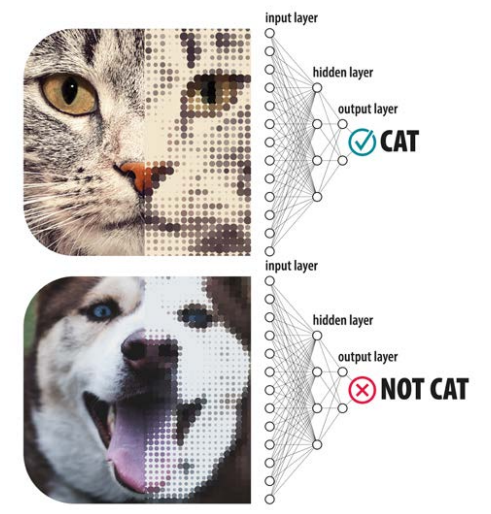
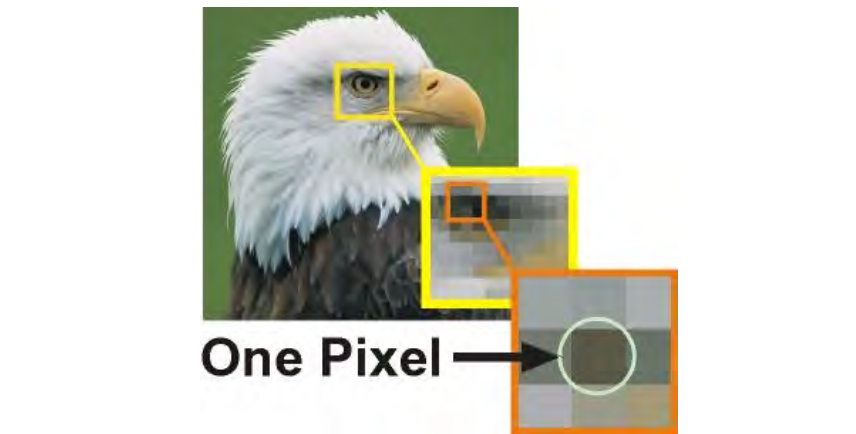
ANNs process data sent to the ‘input layer’ and generate a response at the ‘output layer.’ Intermediate to these layers are one or more ‘hidden layers,’ where signals undergo manipulation. The fundamental structure of an ANN is depicted in below Figure, offering an illustrative example of an ANN designed to predict whether an image depicts a cat. Initially, the image is dissected into individual pixels, which are then transmitted to neurons in the input layer. Subsequently, these signals are relayed to the first hidden layer, where each neuron receives and processes multiple signals to generate a singular output signal.
Schematic of an artificial neural network for recognising images of cats
While above Figure showcases only one hidden layer, ANNs typically incorporate multiple sequential hidden layers. In such cases, the process iterates, with signals traversing each hidden layer until reaching the final output layer. The signal produced at the output layer serves as the ultimate output, representing a decision regarding whether the image portrays a cat or not.
Now we possess a basic Artificial Neural Network (ANN) inspired by a simplified model of the brain, capable of generating a specific output in response to a given input. The ANN lacks true awareness of its actions or an understanding of what a cat is. However, when presented with an image, it reliably indicates whether it ‘thinks’ the image contains a cat. The challenge lies in developing an ANN that consistently provides accurate answers. Firstly, it requires an appropriate structure. For uncomplicated tasks, ANNs may suffice with a dozen neurons in a single hidden layer. The addition of more neurons and layers empowers ANNs to confront more intricate problems.
Deep Neural Networks Inspired by the human brain
Deep learning specifically denotes ANNs with at least two hidden layers, each housing numerous neurons. The inclusion of multiple layers enables ANNs to create more abstract conceptualizations by breaking down problems into smaller sub-problems and delivering more nuanced responses. While theoretically, three hidden layers might be adequate for solving any problem, practical ANNs often incorporate many more. Notably, Google’s image classifiers utilize up to 30 hidden layers. The initial layers identify lines as edges or corners, the middle layers discern shapes, and the final layers assemble these shapes to interpret the image.
If the ‘deep’ aspect of deep learning pertains to the complexity of the ANN, the ‘learning’ part involves training. Once the appropriate structure of the ANN is established, it must undergo training. While manual training is conceivable, it would necessitate meticulous adjustments by a human expert to align neurons with their understanding of identifying cats. Instead, a Machine Learning (ML) algorithm is employed to automate this process. Subsequent sections elucidate two pivotal ML techniques: the first utilizes calculus to incrementally enhance individual ANNs, while the second applies evolutionary principles to yield gradual improvements across extensive populations of ANNs.
Deep Learning Around Us
Deep Learning @ Meta
Meta’s digital landscape is a bustling metropolis powered by an invisible hand: Deep Learning. It’s the algorithm whisperer, shaping your experiences in ways you might not even realize. From the perfect meme in your Instagram feed to the news articles that pique your curiosity, DL is the AI undercurrent guiding your journey.
Let’s dive into the concrete jungle of Meta’s DL applications:
News Feed Personalization: Ever wonder why your Facebook feed feels like a tailor-made magazine? Deep Learning scans your likes, shares, and clicks, creating a unique profile that attracts articles and updates you’ll devour. It’s like having a digital best friend who knows your reading preferences better than you do!
Image and Video Recognition: Tagging that perfect vacation photo with all your friends? Deep Learning’s facial recognition powers are at work. It also identifies objects in videos, fueling features like automated captions and content moderation. Think of it as a super-powered vision system for the digital world.
Language Translation: Breaking down language barriers with the click of a button? Deep Learning’s got your back. It translates posts, comments, and messages in real-time, letting you connect with people across the globe without needing a Rosetta Stone. It’s like having a pocket Babel fish that understands every dialect.
Spam and Fake News Detection: Ever feel like wading through a swamp of online misinformation? Deep Learning acts as a digital gatekeeper, analyzing content for suspicious patterns and identifying spam and fake news before they reach your eyes. It’s the knight in shining armor of the internet, defending against the forces of digital darkness.
Predictive Analytics: Wondering why that perfect pair of shoes keeps popping up in your ads? Deep Learning is analyzing your online behavior, predicting what you might like before you even know it. It’s like having a psychic personal shopper who knows your wardrobe needs better than you do.
And the journey doesn’t end there! Deep Learning is also the mastermind behind Instagram’s Explore recommender system, curating a personalized feed of photos and videos that keeps you endlessly scrolling. It’s like having your own digital art gallery, hand-picked just for you.
Deep Learning @ Meta is more than just algorithms and code. It’s the invisible force shaping our online experiences, making them more personalized, informed, and connected. So next time you scroll through your feed, remember, there’s a whole world of AI magic working behind the scenes, whispering in your ear and making your digital journey truly unique.
Conclusion
Deep learning is not just a technological marvel; it’s a gateway to a future filled with possibilities. Deep learning has transcended traditional machine learning boundaries, paving the way for innovative applications across various industries. The case study of Meta showcases the real-world impact of deep learning in social media and technology. As we continue to explore the depths of this field, ethical considerations and responsible AI practices will play a crucial role in shaping a future where deep learning benefits society at large.
Remember, this is just the tip of the iceberg. The world of deep learning is vast and constantly evolving. As you delve deeper, you’ll encounter even more fascinating concepts and applications. So, keep exploring, keep learning, and keep pushing the boundaries of what’s possible with this transformative technology.
Machine Learning (ML) has emerged as a transformative force in the realm of technology, reshaping the way we approach complex problems and unlocking unprecedented possibilities. In this blog, we will embark on a comprehensive journey through the fascinating world of Machine Learning, exploring its types, key algorithms like backpropagation and gradient descent, and groundbreaking innovations...
In the realm of artificial intelligence (AI), the Turing Test stands as a landmark concept that has sparked intense debate, intrigue, and exploration since its inception in the mid-20th century. Conceived by the legendary British mathematician and computer scientist Alan Turing in 1950, the Turing Test has become a pivotal benchmark for assessing machine intelligence and the potential emergence of true artificial consciousness. In this blog, we will delve into the intricacies of the Turing Test, exploring its origins, significance, criticisms, and its enduring impact on the field of AI.
The Genesis of the Turing Test
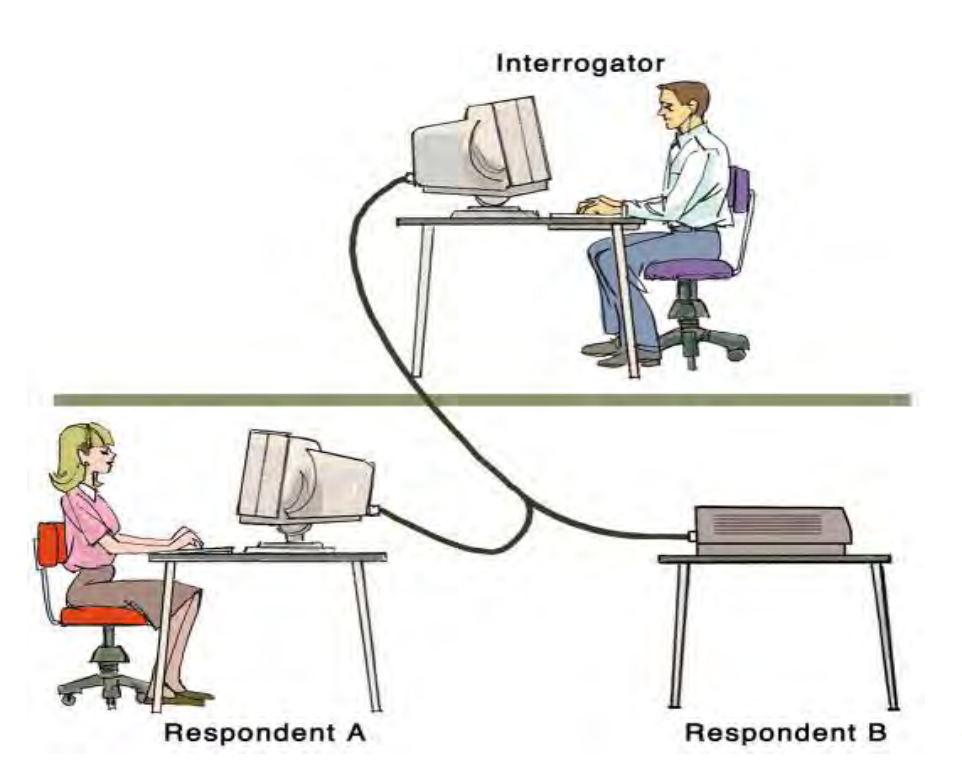
Alan Turing introduced the idea of the Turing Test in his seminal paper titled “Computing Machinery and Intelligence,” published in the journal Mind in 1950. The central premise of the test revolves around a human judge engaging in a natural language conversation with both a human and a machine without knowing which is which. If the judge cannot reliably distinguish between the two based on their responses, then the machine is said to have passed the Turing Test.
How Test performed?
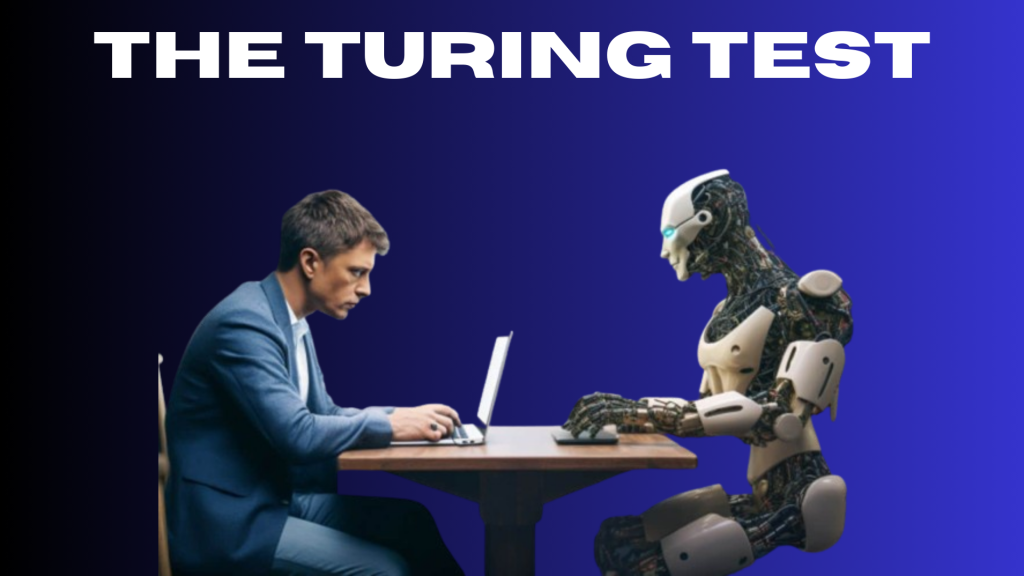
The Turing test is a simple test of a machine’s ability to exhibit intelligent behavior equivalent to, or indistinguishable from, that of a human. The test is conducted by a human judge who converses with two hidden interlocutors, one of whom is a human and the other a machine. The judge’s task is to determine which of the interlocutors is the machine. If the judge cannot reliably tell the machine apart from the human, the machine is said to have passed the test.
Instead of directly tackling the ambiguous territory of “thinking,” Turing proposed a clever test of conversational indistinguishability. Imagine a guessing game played by three individuals: a human interrogator, a human respondent, and a hidden machine tasked with mimicking the human respondent. Through text-based communication, the interrogator questions both participants, attempting to discern who is the machine. If the machine successfully deceives the interrogator for the majority of the time, it is deemed to have passed the Turing Test, signifying its ability to exhibit intelligent behavior indistinguishable from a human.
More Than Just Words
The Turing Test extends beyond mere mimicry. While superficially it appears to be just a game of parlor tricks, the test delves deeper into the capabilities of the machine. To truly fool the interrogator, the machine must demonstrate:
Natural Language Processing (NLP): The Turing Test places a significant emphasis on the machine’s ability to engage in a conversation that is indistinguishable from that of a human. This involves not only understanding and generating language but also exhibiting a grasp of context, nuance, and subtlety.
Context Awareness: Machines undergoing the Turing Test must showcase an understanding of the context in which the conversation unfolds. This involves interpreting and responding to ambiguous statements, references, and implied meanings—a cognitive feat that has traditionally been associated with human intelligence.
Adaptability and Learning: Turing envisioned machines that could adapt and learn from their interactions, evolving their responses based on the ongoing conversation. This adaptability is a key aspect of simulating human-like intelligence.
Significance of the Turing Test
Milestone in AI Development: The Turing Test has served as a milestone, challenging researchers and developers to create machines that not only perform specific tasks but also exhibit a level of intelligence that can convincingly mimic human behavior.
Philosophical Implications: Beyond its technical aspects, the Turing Test has profound philosophical implications. It prompts us to ponder the nature of consciousness, self-awareness, and the potential for machines to possess a form of intelligence akin to our own.
Criticisms and Challenges
Despite its influential role in AI history, the Turing Test isn’t without its critics. Some argue it prioritizes human-like behavior over actual intelligence, potentially overlooking machines with different, yet equally valid, forms of intelligence. Others point out the subjective nature of the test, heavily reliant on the specific interrogator and their biases.
Limited Scope: Critics argue that the Turing Test sets a narrow benchmark for intelligence, focusing primarily on linguistic abilities. Intelligence, they contend, is a multifaceted concept that encompasses diverse skills and capabilities beyond language.
Deceptive Simulations: Some argue that passing the Turing Test does not necessarily indicate true intelligence but rather the ability to simulate it convincingly. Machines might excel at imitating human conversation without truly understanding the underlying concepts.
Subjectivity of Judgment: The judgment of whether a machine has passed the Turing Test is inherently subjective and dependent on the skills and biases of the human judge. This subjectivity raises questions about the test’s reliability as a definitive measure of machine intelligence.
The Chinese Room
The Chinese Room is a philosophical thought experiment proposed by John Searle in 1980. The purpose of this experiment is to challenge the idea that a computer program, no matter how sophisticated, can truly understand the meaning of the information it processes. It’s often used in discussions about artificial intelligence, consciousness, and the nature of mind.
Here’s a more detailed explanation of the Chinese Room thought experiment:
Setting of the Chinese Room:
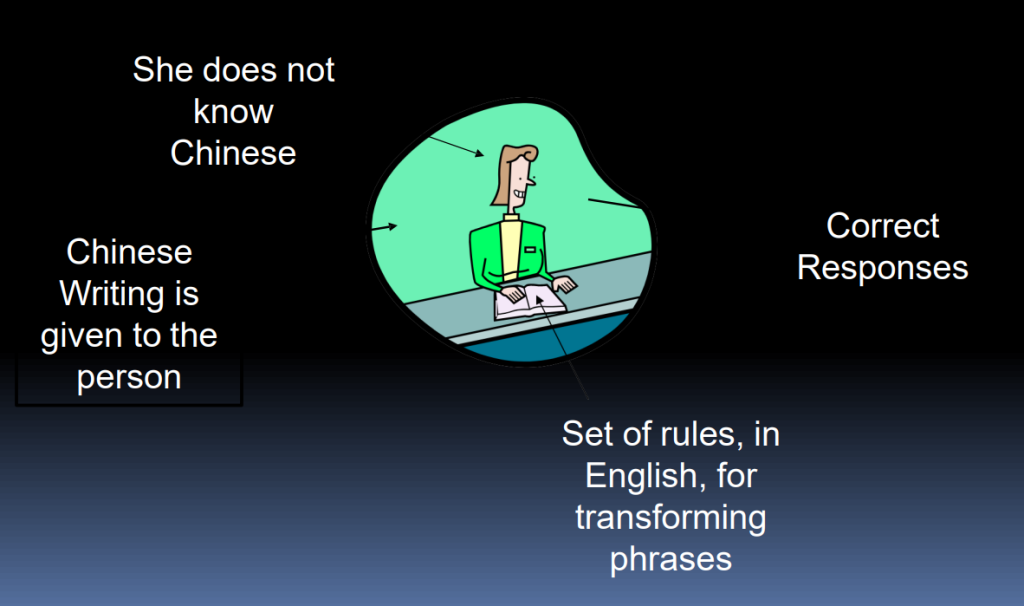
Imagine a person (let’s call him “Searle”) who does not understand Chinese and is placed inside a closed room.
Searle receives Chinese characters (symbols) slipped through a slot in the door. These symbols constitute questions in Chinese.
Searle has with him a massive rule book (analogous to a computer program or algorithm) written in English. This book instructs him on how to manipulate the Chinese symbols based on their shapes and forms.
By following the rules in the book, Searle produces appropriate responses in Chinese characters without actually understanding the meaning of the questions or his responses.
The concept of the Chinese Room involves envisioning an individual confined within a room and presented with a collection of Chinese writing, despite lacking comprehension of the language. Subsequently, additional Chinese text and a set of instructions (provided in a language the individual understands, such as English) are given to guide the arrangement of the initial set of Chinese characters with the second set.
Assuming the person becomes highly proficient in manipulating the Chinese symbols based on the provided rules, observers outside the room might mistakenly believe that the individual comprehends Chinese. However, according to Searle’s argument, true understanding is absent; the person is merely adhering to a prescribed set of rules.
By extension, Searle posits that a computer, similarly engaged in symbol manipulation without genuine comprehension of semantic context, can never attain true intelligence. The essence of intelligence, in this perspective, goes beyond mere symbol manipulation to encompass a deeper understanding of semantic meaning.
Key Points and Implications:
Behavior vs. Understanding: In the Chinese Room scenario, Searle, who represents a computer executing a program, is able to produce responses that seem intelligent and contextually appropriate without having any understanding of Chinese. This illustrates the difference between outward behavior (responding correctly to input) and genuine understanding.
Syntax vs. Semantics: Searle argues that the computer, like himself in the Chinese Room, is manipulating symbols based on syntax (rules about symbol manipulation) without grasping the semantics (meaning) of those symbols. Understanding, according to Searle, involves more than just following rules for symbol manipulation.
The Limits of Computation: The Chinese Room is often used to challenge the idea that computation alone (manipulating symbols according to rules) is sufficient for true understanding. Searle contends that even the most advanced computer programs lack genuine understanding and consciousness.
Consciousness and Intentionality: Searle introduces the concept of “intentionality,” which is the property of mental states being about something. He argues that consciousness and intentionality are intrinsic to human understanding but cannot be replicated by mere computation.
The Chinese Room thought experiment is a way of illustrating the distinction between behavior that appears intelligent and genuine understanding. It raises questions about the nature of consciousness, the limits of computation, and the necessary conditions for true understanding and meaning.
Difference between turing test and the chineese room
The Turing Test and the Chinese Room are two distinct concepts in the field of artificial intelligence and philosophy of mind. Here are the key differences between the two:
Nature of Assessment:
Turing Test: Proposed by Alan Turing in 1950, the Turing Test is a test of a machine’s ability to exhibit intelligent behavior indistinguishable from that of a human. It involves a human judge interacting with both a machine and a human, without knowing which is which. If the judge cannot reliably distinguish between the two, the machine is said to have passed the Turing Test.
Chinese Room: Proposed by John Searle in 1980, the Chinese Room is a thought experiment designed to challenge the idea that a computer can truly understand and have consciousness. It focuses on the internal processes of a system rather than its observable behavior.
Criteria for Intelligence:
Turing Test: The Turing Test is focused on the external behavior of a system. If a system can produce responses indistinguishable from those of a human, it is considered to possess human-like intelligence.
Chinese Room: The Chinese Room thought experiment questions whether a system that processes information symbolically (like a computer) truly understands the meaning of the symbols or if it’s merely manipulating symbols based on syntax without genuine comprehension.
Emphasis on Understanding:
Turing Test: The Turing Test is more concerned with the ability to produce intelligent behavior, and it doesn’t necessarily require the machine to understand the meaning of the information it processes.
Chinese Room: The Chinese Room emphasizes the importance of understanding and argues that merely manipulating symbols according to rules (as in a program) does not constitute true understanding.
Communication and Language:
Turing Test: The Turing Test often involves natural language understanding and communication as part of its evaluation criteria.
Chinese Room: The Chinese Room specifically addresses the limitations of systems that process symbols (such as language) without understanding their meaning.
In short, while the Turing Test assesses the ability of a machine to mimic human behavior in a way that is indistinguishable from a human, the Chinese Room thought experiment challenges the idea that purely syntactic manipulation of symbols, as performed by a computer, can amount to genuine understanding or consciousness.
The Turing Test’s Legacy
Even with its limitations, the Turing Test continues to be a potent symbol in the quest for artificial intelligence. It serves as a benchmark for language models, pushing the boundaries of human-machine interaction and forcing us to re-evaluate our understanding of intelligence itself.
Whether or not a machine will ever truly “pass” the Turing Test remains an open question. But as AI continues to evolve, the conversation sparked by this ingenious test reminds us of the fascinating complexities of intelligence, both human and artificial.
The Loebner Award for Turing Test Excellence
The Loebner Award is an annual competition in the field of artificial intelligence, designed to recognize computer programs that, according to the judges, demonstrate the highest degree of human-likeness through the application of the Turing Test. This test involves interactions with both computers and individuals.
Launched by Hugh Loebner in 1990, the competition presents bronze, silver, and gold coin prizes, along with monetary rewards. Notably, the winners thus far have exclusively received the bronze medal, along with a $4,000 monetary award.
Silver: An exclusive one-time prize of $25,000 will be awarded to the first program that judges cannot distinguish from a real human.
Gold: A remarkable prize of $100,000 awaits the first program that judges cannot differentiate from a real human in a Turing test, encompassing the interpretation and comprehension of text, visual, and auditory input.
Upon the achievement of this groundbreaking milestone, signaling the capability of a program to seamlessly emulate human-like responses across diverse modalities, the annual competition will come to a close.
The Evolution of AI Beyond the Turing Test
As AI research has progressed, new paradigms and benchmarks have emerged, challenging the limitations of the Turing Test. Tasks such as image recognition, game playing, and complex problem-solving have become integral to evaluating AI systems. Despite its critiques, the Turing Test remains a foundational concept that paved the way for subsequent developments in the field.
Conclusion:
The Turing Test stands as a testament to the enduring fascination with the idea of machines possessing human-like intelligence. While it has its limitations and has spurred ongoing debates, the test continues to shape the trajectory of AI research and development. As technology advances, the quest for creating machines that not only simulate but truly understand and exhibit human intelligence remains a captivating and challenging journey. The Turing Test, in its essence, remains a touchstone in this ongoing exploration of artificial minds.
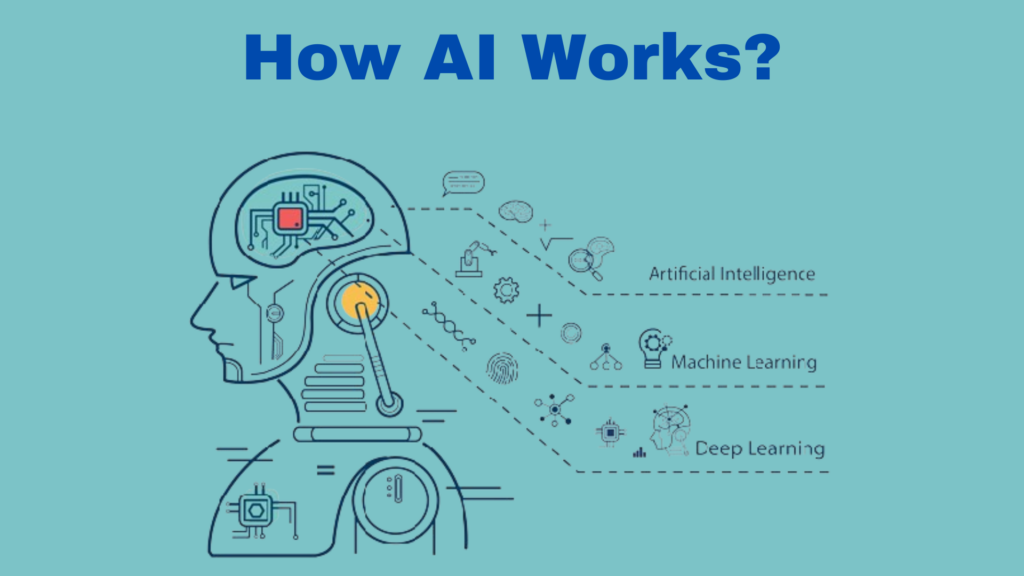
Artificial Intelligence (AI) is no longer confined to the realm of science fiction; it has become an integral part of our daily lives. AI is ubiquitous. But how does this seemingly magical technology actually work? Underneath the hood, AI relies on a fascinating interplay of algorithms, data, and computing power. In this blog, we’ll dive into the inner workings of AI, exploring key concepts like symbolic AI, artificial neural networks (ANNs), and the intricate process of neural network training.
Big Question : How AI Works?
Over the course of the last five decades, artificial intelligence (AI) has undergone a continuous process of evolution. In order to gain insights into the intricate workings of AI, it is imperative to trace its development from its inception to the present day. To cultivate a comprehensive understanding, our exploration will commence with an examination of the inaugural phase, focusing on the early AI methodologies commonly known as ‘symbolic AI.’ Despite the potential for obsolescence, these methods remain remarkably relevant and have found successful applications across diverse domains.
A pivotal aspect of comprehending how AI functions involves an exploration of symbolic AI, as it serves as the foundation for subsequent advancements. Moving forward, our investigation will extend to the realm of Human Neural Networks, providing a deeper understanding of the intricate workings of the human brain. By unraveling the complexities of symbolic AI and delving into the mechanics of the human brain, we pave the way for a more nuanced exploration of the functionality of Artificial Neural Networks (ANNs).
First wave: symbolic artificial intelligence
Symbolic AI denotes the methodology of creating intelligent machines through the encapsulation of expert knowledge and experience into sets of rules executable by the machine. This form of AI is labeled symbolic due to its reliance on symbolic reasoning, exemplified by logic structures such as “if X=Y and Y=Z then X=Z,” to represent and resolve problems. From the 1950s to the 1990s, symbolic AI was the predominant approach in AI applications. Although contemporary AI landscapes are dominated by different methodologies, symbolic AI remains employed in various contexts, ranging from thermostats to cutting-edge robotics. This discussion delves into two prevalent approaches within symbolic AI: expert systems and fuzzy logic.
Expert Systems
In these systems, a human with expertise in the application’s domain creates specific rules for a computer to follow. These rules, known as algorithms, are usually coded in an ‘if-then-else’ format. For instance, when crafting a symbolic AI doctor, the human expert might begin with the following pseudocode:
Symbolic AI is often described as “keeping the human in the loop” because its decision-making process closely mirrors how human experts make decisions. Essentially, the intelligence within the system is derived directly from human expertise, which is recorded in a format that the computer can comprehend. This “machine-readable” format allows humans to easily comprehend the decision-making process. Moreover, it enables them to identify errors, discover opportunities for program enhancement, and make updates to the code accordingly. For instance, one can incorporate clauses to address specific cases or integrate new medical knowledge into the system.
The example highlights a fundamental limitation of this type of expert system. To create a practical and dependable system capable of addressing intricate and dynamic real-world challenges, such as the responsibilities of a medical doctor, an abundance of rules and exceptions would be necessary. Consequently, the system would rapidly become intricate and extensive. Symbolic AI excels in environments with minimal changes over time, where rules are stringent, and variables are clear-cut and quantifiable. An illustration of such an environment is the computation of tax liability. Tax experts and programmers can collaborate to formulate expert systems that implement the current rules for a specific tax year. When provided with data describing taxpayers’ income and relevant circumstances, the tool can compute tax liability, incorporating applicable levies, allowances, and exceptions.
Fuzzy logic: capturing intuitive expertise
In the expert system mentioned earlier, each variable is binary — either true or false. The system relies on absolute answers to questions like whether a patient has a fever, often simplified to a straightforward calculation based on a temperature reading above 37 °C. However, reality is often more nuanced. Fuzzy logic offers an alternative approach to expert systems, enabling variables to possess a ‘truth value’ between 0 and 1. This value reflects the degree to which the variable aligns with a particular category.
Fuzzy logic proves valuable in scenarios where variables are uncertain and interrelated, allowing for a more nuanced representation. For instance, patients can be assigned a rating indicating how well they fit the fever category, which may consider factors like temperature, age, or time of day. This flexibility accommodates cases where a patient might be considered a borderline case.
Fuzzy logic finds practical application in capturing intuitive knowledge, where experts excel in making decisions amidst wide-ranging and uncertain variables. It has been employed in developing control systems for cameras that autonomously adjust settings based on prevailing conditions. Similarly, in stock trading applications, fuzzy logic helps establish rules for buying and selling under diverse market conditions. In both instances, the fuzzy system continuously evaluates numerous variables, adheres to rules devised by human experts to adjust truth values, and leverages them to autonomously make decisions.
Good old-fashioned artificial intelligence
Symbolic AI systems necessitate human experts to encode their knowledge in a format understandable to computers, imposing notable constraints on their autonomy. While these systems can execute tasks automatically, their actions are confined to explicit instructions, and any improvement is contingent upon direct human intervention. Consequently, Symbolic AI proves less effective in addressing intricate issues characterized by real-time changes in both variables and rules. Regrettably, these are precisely the challenges where substantial assistance is needed. The complexity of a doctor’s domain knowledge and expertise, evolving continually over time, cannot be comprehensively captured by millions of ‘if-then-else’ rules.
Despite these limitations, Symbolic AI is far from obsolete. It demonstrates particular efficacy in supporting humans tackling repetitive issues within well-defined domains, such as machine control and decision support systems. The consistent performance of Symbolic AI in these areas has affectionately earned it the moniker of ‘good old-fashioned AI.’
ANNs: Inspiration from the Human Brain
Contemporary AI, specifically machine learning, excels in enhancing various tasks such as capturing high-quality photos, translating languages, identifying acquaintances on social media platforms like Facebook, generating search outcomes, filtering out unwanted spam, and handling numerous other responsibilities. The prevalent methodology employed in this technology involves neural networks, mimicking the intricate functioning of the human brain, as opposed to the conventional computing paradigm based on sequential IF THIS, THEN steps.
Understanding the human brain and its neural network is crucial before delving into the second wave of AI dominated by machine learning (ML) and deep learning, where ANNs(Artificial Neural Networks) play a significant role. Let’s delve into a brief review of the human brain and the neurons within it before discussing artificial neural networks.
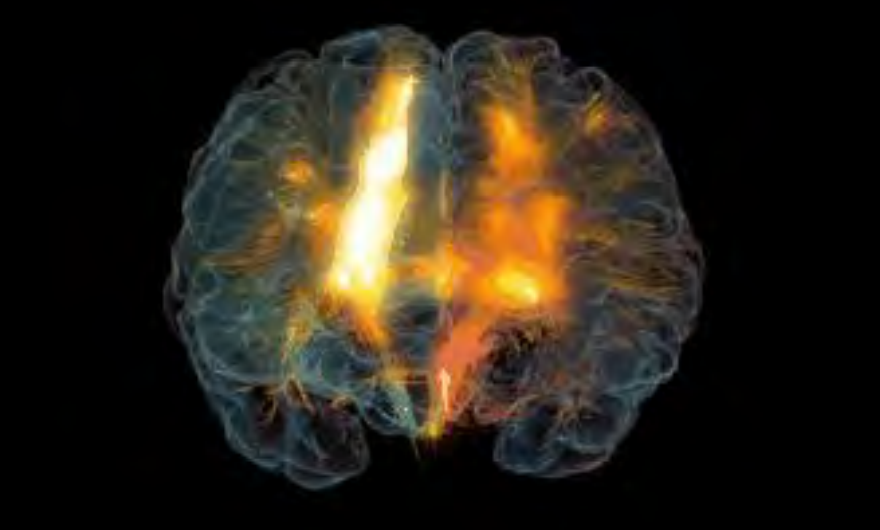
The Human Brain
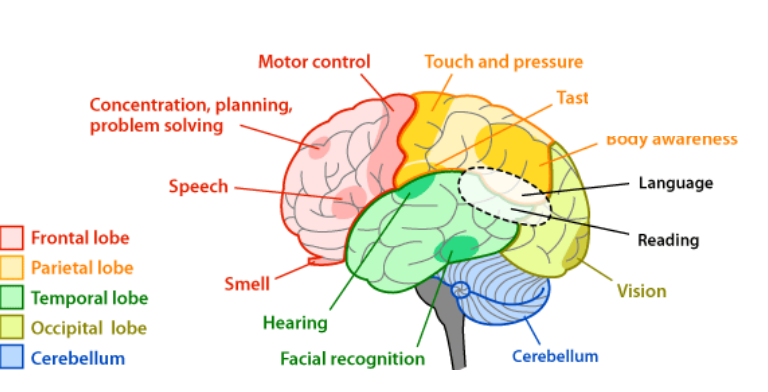
The human brain is indeed divided into different lobes, each responsible for various functions. The four main lobes are the frontal lobe, parietal lobe, temporal lobe, and occipital lobe. Additionally, the cerebellum is a distinct structure located at the back of the brain, below the occipital lobe.
Frontal Lobe: This lobe is located at the front of the brain and is associated with functions such as reasoning, planning, problem-solving, emotions, and voluntary muscle movements.
Parietal Lobe: Situated near the top and back of the brain, the parietal lobe is responsible for processing sensory information it receives from the outside world, such as spatial sense and navigation (proprioception), the main sensory receptive area for the sense of touch.
Temporal Lobe: Found on the sides of the brain, the temporal lobe is involved in processing auditory information and is also important for the processing of semantics in both speech and vision. The hippocampus, a key structure for memory, is located within the temporal lobe.
Occipital Lobe: Positioned at the back of the brain, the occipital lobe is primarily responsible for processing visual information from the eyes.
Cerebellum: The cerebellum is located at the back and bottom of the brain, underneath the occipital lobe. It is crucial for coordinating voluntary movements, balance, and posture. Despite its relatively small size compared to the rest of the brain, the cerebellum plays a vital role in motor control and motor learning.
Each lobe and the cerebellum has specific functions, and they work together to enable various cognitive and motor functions in humans.
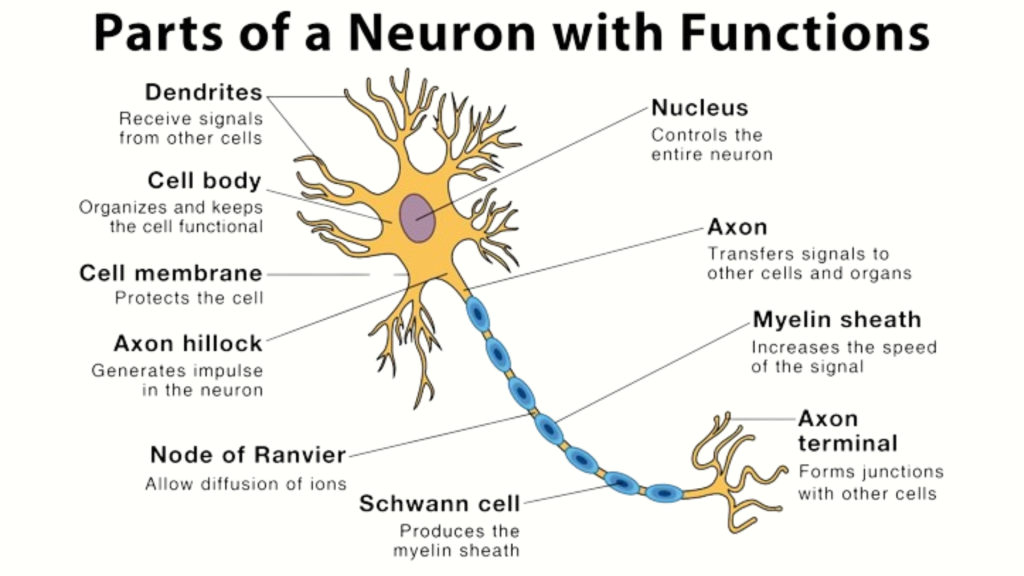
Types and Function of Neurons
Neurons play a vital role in executing all functions performed by our body and brain. The intricacy of neuronal networks is responsible for shaping our personalities and fostering our consciousness. Approximately 10% of the brain is comprised of neurons, with the remainder consisting of supporting glial cells and other cells dedicated to nourishing and sustaining the neurons.
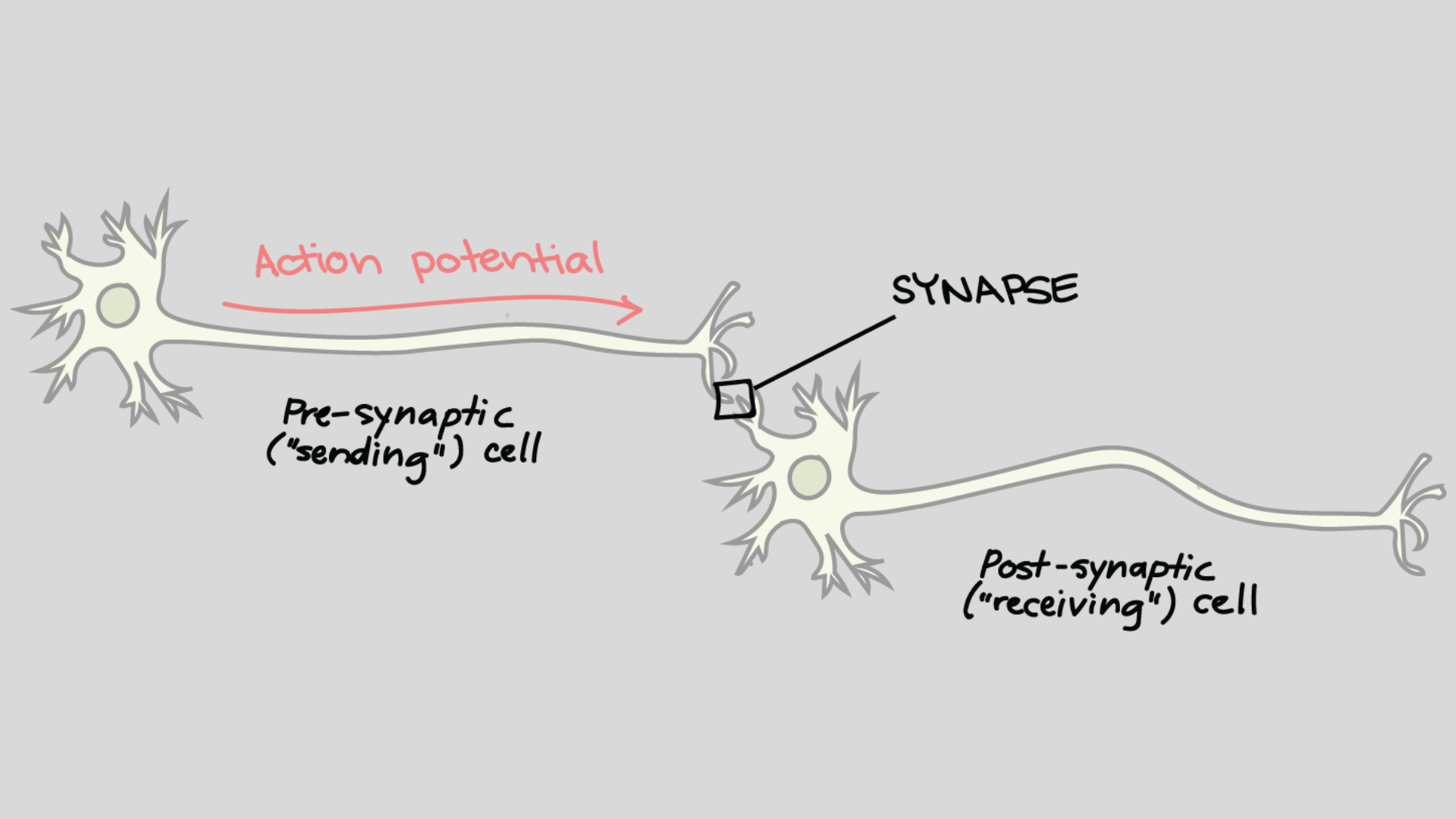
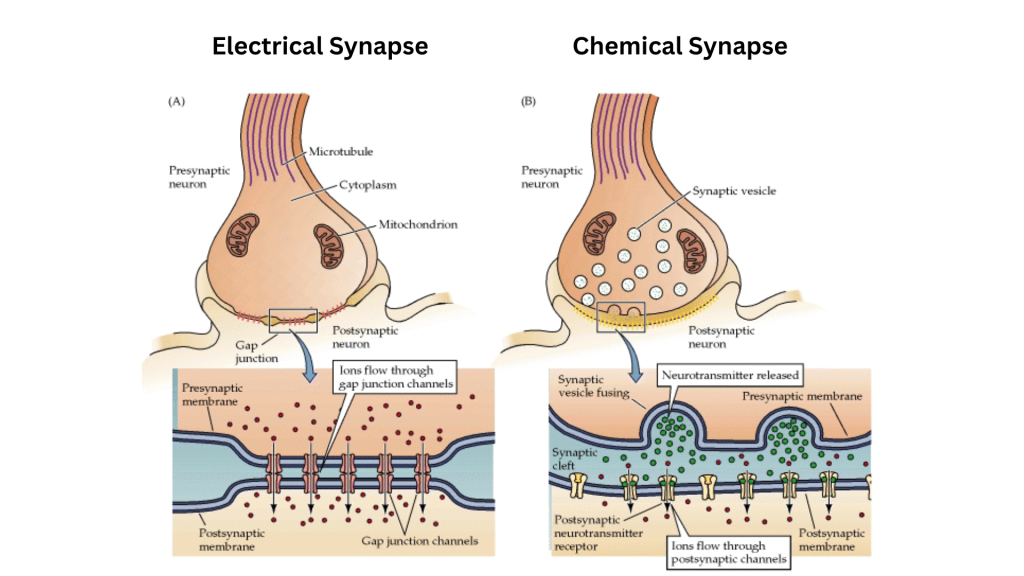
There are around 86 billion neurons in the brain. To reach this huge target, a developing fetus must create around 250,000 neurons per minute! Each neuron is connected to at least 10,000 others – giving well over 1,000 trillion connections (1 quadrillion connections). They all connect at a junction called a synapse, which can be electrical or a higher percentage of them are chemical,we will discuss them in more detail soon.
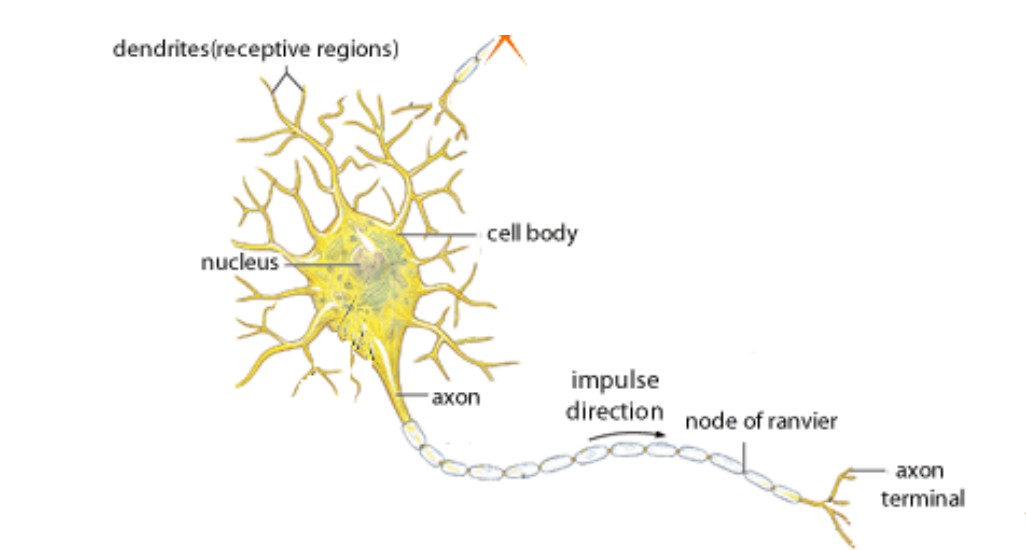
Signals received by neurons can be categorized as either excitatory, encouraging the neuron to generate an electrical impulse, or inhibitory, hindering the neuron from firing. A singular neuron may possess multiple sets of dendrites, receiving a multitude of input signals. The decision for a neuron to fire an impulse is contingent upon the cumulative effect of all received excitatory and inhibitory signals. If the neuron does undergo firing, the nerve impulse is transmitted along the axon.
The Process of Synapses
Neurons establish connections at specific sites known as synapses to facilitate communication of messages. Remarkably, at these points of connection, none of the cells physically touch each other! The transmission of signals from one nerve fiber to the next occurs through either an electrical or a chemical signal, achieving speeds of up to 268 miles per hour.
Recent evidence suggests a close interaction between both types of signals, indicating that the transmission of nerve signals involves a combination of chemical and electrical processes, essential for normal brain development and function.
If you don’t use a foreign language you learned years ago or mathematics, the neurons used for those things will move the synapses away from each other so they can do other things that you are learning to do. This is called Synaptic Pruning.
Artificial Neural Network (ANN)
A human neural network refers to the interconnected network of neurons in the human brain. Neurons are the fundamental units of the nervous system, responsible for transmitting signals and information. The architecture of artificial neural networks (ANNs) is inspired by the organization and functioning of these biological neural networks.
In the context of the human brain, a neuron receives input signals from multiple other neurons through its dendrites. These inputs are then processed in the cell body, and if the accumulated signals surpass a certain threshold, the neuron “fires,” sending an output signal through its axon to communicate with other neurons.
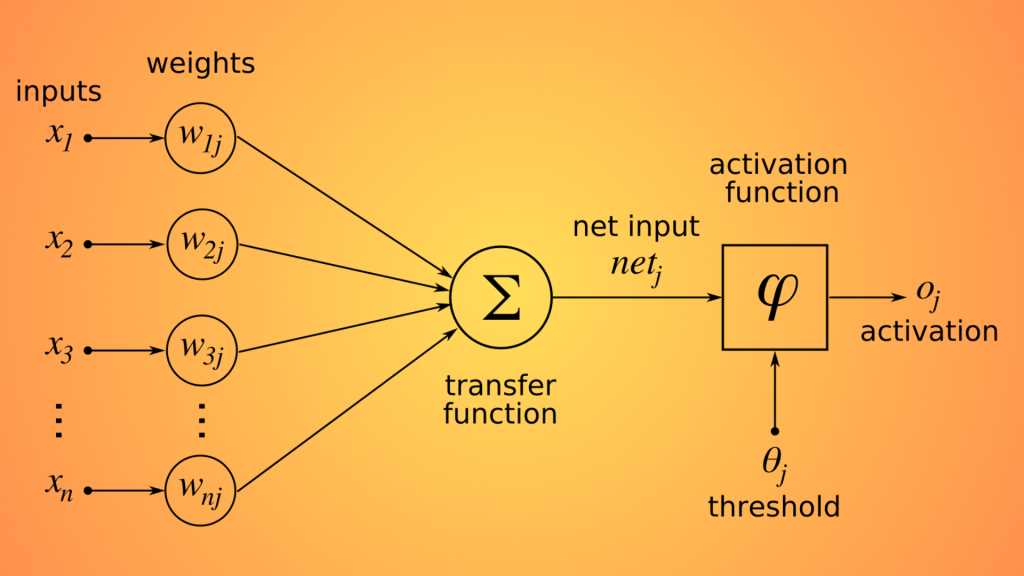
The analogy with artificial neural networks is that a simple artificial neuron, also known as a perceptron, takes input from multiple sources, each with an associated weight. These inputs are then combined, and if the sum exceeds a certain threshold, the artificial neuron activates and produces an output. The activation function is often used to determine whether the neuron should be activated based on the weighted sum of inputs.
In both cases, the idea is to model the way information is processed and transmitted through interconnected nodes. While ANNs are a simplified abstraction of the complex biological neural networks found in the human brain, they provide a powerful computational framework for various tasks, including pattern recognition, classification, and decision-making.
Fundamental Structure of an ANN
As we know now, Artificial Neural Networks (ANNs) derive inspiration from the electro-chemical neural networks observed in human and other animal brains. While the precise workings of the brain remain somewhat enigmatic, it is established that signals traverse a complex network of neurons, undergoing transformations in both the signal itself and the structure of the network. In ANNs, inputs are translated into signals that traverse a network of artificial neurons, culminating in outputs that can be construed as responses to the original inputs. The learning process involves adapting the network to ensure that these outputs are meaningful, exhibiting a level of intelligence in response to the inputs.
ANNs process data sent to the ‘input layer’ and generate a response at the ‘output layer.’ Intermediate to these layers are one or more ‘hidden layers,’ where signals undergo manipulation. The fundamental structure of an ANN is depicted in below Figure, offering an illustrative example of an ANN designed to predict whether an image depicts a cat. Initially, the image is dissected into individual pixels, which are then transmitted to neurons in the input layer. Subsequently, these signals are relayed to the first hidden layer, where each neuron receives and processes multiple signals to generate a singular output signal.
Schematic of an artificial neural network for recognising images of cats
While above Figure showcases only one hidden layer, ANNs typically incorporate multiple sequential hidden layers. In such cases, the process iterates, with signals traversing each hidden layer until reaching the final output layer. The signal produced at the output layer serves as the ultimate output, representing a decision regarding whether the image portrays a cat or not.
Deep learning specifically denotes ANNs with at least two hidden layers, each housing numerous neurons. The inclusion of multiple layers enables ANNs to create more abstract conceptualizations by breaking down problems into smaller sub-problems and delivering more nuanced responses. While theoretically, three hidden layers might be adequate for solving any problem, practical ANNs often incorporate many more. Notably, Google’s image classifiers utilize up to 30 hidden layers. The initial layers identify lines as edges or corners, the middle layers discern shapes, and the final layers assemble these shapes to interpret the image.
Training Neural Networks
Training a Neural Network involves exposing it to a large dataset and adjusting the weights to minimize the difference between the predicted output and the actual output. This process is known as backpropagation, where the network learns by iteratively updating the weights based on the calculated errors.
The training phase allows the Neural Network to generalize from the provided data, enabling it to make accurate predictions on new, unseen data. The success of a Neural Network often depends on the quality and diversity of the training data.
Deep Learning, a subfield of machine learning, introduces deep neural networks with multiple hidden layers. Deep Learning has revolutionized AI by enabling the extraction of hierarchical features and representations, making it suitable for complex tasks.
For example : Train a neural network to recognize an eagle in a picture
Training a neural network involves adjusting its internal parameters, such as weights and thresholds, so that it can perform a specific task effectively. The output of the artificial neuron is binary, taking on a value of 1 if the sum of the weighted inputs surpasses the threshold and 0 otherwise.
Train a neural network to recognize an eagle in a picture by using a labeled dataset and configuring the network to output probabilities for each pixel, where a value of 1 indicates the presence of an eagle and 0 indicates absence.
Conclusion:
Artificial Intelligence, with its foundations in Symbolic AI and the transformative power of Neural Networks, has evolved into a sophisticated tool capable of emulating human-like intelligence. Symbolic AI provides structured, rule-based decision-making, while Neural Networks leverage the complexity of interconnected artificial neurons to excel in pattern recognition and learning from vast datasets. As technology advances, the synergy between these approaches continues to drive the evolution of AI, promising a future where machines can emulate human cognition with unprecedented accuracy and efficiency.
Artificial intelligence (AI) hasbecome a ubiquitous term in recent years, but what exactly is it? And how is this rapidly evolving field poised to reshape our world? Artificial Intelligence (AI) has emerged as one of the most transformative technologies of the 21st century, reshaping the way we live, work, and interact. From virtual assistants and self-driving cars to advanced medical diagnostics, Artificial Intelligence is becoming increasingly integrated into our daily lives. This article provides a comprehensive overview of what Artificial Intelligence is, its underlying principles, and how it is poised to shape the future.
Understanding Artificial Intelligence
In simple terms, Artificial Intelligence (AI) is a type of computer technology that enables machines to think and tackle complex problems, much like how humans use their intelligence. For instance, when we humans perform a task, we might make mistakes and learn from them. Similarly, Artificial Intelligence is designed to work on problems, make errors, and learn from those errors to improve itself.
To illustrate, you can think of AI as playing a game of chess. Every wrong move you make in the game decreases your chances of winning. So, just like when you lose a game, you analyze the moves you shouldn’t have made and use that knowledge in the next game, AI learns from its mistakes to enhance its problem-solving abilities. Over time, AI becomes more proficient, and its accuracy in solving problems or winning “games” significantly improves. Essentially, AI is programmed to learn and improve itself through a process similar to how we refine our skills through experience.
Definition of Artificial Intelligence
John McCarthy, often regarded as the father of Artificial Intelligence, defined AI as the “science and engineering of making intelligent machines, especially intelligent computer programs.” AI, as a branch of science, focuses on assisting machines in solving intricate problems in a manner that mimics human intelligence.
In practical terms, this means incorporating traits from human intelligence and translating them into algorithms that computers can understand and execute. The degree of flexibility or efficiency in this process can vary based on the established requirements, shaping how convincingly the intelligent behavior of the machine appears to be artificial. In essence, AI involves adapting human-like qualities for computational use, tailoring the approach based on specific needs and objectives.
There are other possible definitions “Artificial Intelligence is a collection of hard problems which can be solved by humans and other living things, but for which we don’t have good algorithms for solving.” e. g., understanding spoken natural language, medical diagnosis, circuit design, learning, self-adaptation, reasoning, chess playing, proving math theories, etc.
In short, AI refers to the simulation of human intelligence, Mimicking the intelligence or behavioral pattern of humans or any other living entity.
A Brief Historyof Artificial Intelligence
The idea of Artificial Intelligence (AI) isn’t as recent as it may seem. Its roots go back to as early as 1950 when Alan Turing introduced the Turing test. The first chatbot computer program, ELIZA, emerged in the 1960s. Notably, in 1977, IBM’s Deep Blue, a chess computer, achieved a groundbreaking feat by defeating a world chess champion in two out of six games, with one win for the champion and three games resulting in a draw.
Fast forward to 2011, and Apple unveiled Siri as a digital assistant, marking another milestone in the evolution of AI. Additionally, in 2015, Elon Musk and a group of visionaries established OpenAI, contributing to the ongoing advancements in the field.
Key moments in the timeline of Artificial Intelligence
1950: The Turing Test: Alan Turing’s proposed test is still an important benchmark for measuring machine intelligence. It asks whether a machine can hold a conversation indistinguishable from a human.
1956: The Dartmouth Workshop: This event is considered the birth of AI as a dedicated field of research.
1960s: ELIZA: One of the first chatbots, ELIZA simulated a psychotherapist by using pattern matching and keyword responses. Although not truly “intelligent,” it sparked conversations about machine communication.
1980s: Expert Systems: These knowledge-based systems tackled specific problems in domains like medicine and finance.
1990s: Artificial Neural Networks: Inspired by the brain, these algorithms showed promise in pattern recognition and learning.
1997: Deep Blue: This chess-playing computer defeated Garry Kasparov, the world champion, in a historic match. It demonstrated the power of AI in complex strategic games.
2010s: Deep Learning: This powerful approach enables machines to learn from vast amounts of data, leading to breakthroughs in image recognition, speech recognition, and natural language processing.
2011: Siri: Apple’s voice assistant made AI more accessible and integrated into everyday life. Siri paved the way for other virtual assistants like Alexa and Google Assistant.
2015: OpenAI: Founded by Elon Musk and others, OpenAI aims to research and develop safe and beneficial AI for humanity.
RecentKey Highlights of Artificial Intelligence
2016:AlphaGo defeats Lee Sedol: DeepMind’s AlphaGo program made history by defeating Lee Sedol, a world champion in the complex game of Go. This win marked a significant milestone in AI’s ability to master challenging strategic tasks.
2016:Rise of Generative Adversarial Networks (GANs): GANs emerged as a powerful technique for generating realistic images, videos, and other forms of creative content. This opened up new possibilities for applications in art, design, and entertainment.
2017:Breakthroughs in natural language processing: AI systems achieved significant improvements in tasks like machine translation and text summarization, blurring the lines between human and machine communication.
2017:Self-driving cars take center stage: Companies like Waymo and Tesla made significant progress in developing self-driving car technology, raising hopes for a future of autonomous transportation.
2018:AlphaStar masters StarCraft II: DeepMind’s AlphaStar AI defeated professional StarCraft II players, showcasing its ability to excel in real-time strategy games with complex and dynamic environments.
2018:Rise of Explainable AI: As AI systems became more complex, the need for explainability grew. Explainable AI techniques were developed to make AI decisions more transparent and understandable for humans.
2019: AI for social good: Applications of AI for social good gained traction, including using AI to detect diseases, predict natural disasters, and combat climate change.
2019:Generative AI models: Generative AI models like GPT-3 and Jurassic-1 Jumbo became increasingly sophisticated, capable of generating human-quality text, code, and even music.
2020-23: The boom of large language models: LLMs like LaMDA, Megatron-Turing NLG, and WuDao 2.0 pushed the boundaries of AI’s ability to understand and generate language, leading to advancements in conversational AI, writing assistance, and code generation.
2020-23: AI in healthcare: AI continues to revolutionize healthcare with applications in medical diagnosis, drug discovery, and personalized medicine.
2020-23: Focus on ethical AI: Concerns about bias, fairness, and transparency in AI have led to increased focus on developing ethical AI practices and regulations.
These are just a few highlights of the incredible progress made in AI since 2015. The field continues to evolve at a rapid pace, with new breakthroughs and applications emerging all the time. As we move forward, it’s crucial to ensure that AI is developed and used responsibly, for the benefit of all humanity.
Types of Artificial Intelligence
Artificial Intelligence (AI) can be categorized into various types based on its capabilities and approaches. Here’s an overview of different types of AI in these two dimensions:
Types of Artificial Intelligence by Capabilities:
Artificial Narrow Intelligence (ANI): This is the most common type of AI we see today. It’s also known as weak AI or narrow AI. ANIs are designed to excel at specific tasks, like playing chess, recognizing faces, or recommending products. They’re trained on vast amounts of data related to their specific domain and can perform those tasks with superhuman accuracy and speed. However, they lack the general intelligence and adaptability of humans and can’t apply their skills to other domains.
Artificial General Intelligence (AGI): This is the holy grail of AI research. AGI, also known as strong AI, would be able to understand and learn any intellectual task that a human can. It would have common sense, reasoning abilities, and the ability to adapt to new situations. While AGI is still theoretical, significant progress is being made in areas like machine learning and natural language processing that could pave the way for its development.
Artificial Super Intelligence (ASI): This is a hypothetical type of AI that would surpass human intelligence in all aspects. ASIs would not only be able to perform any intellectual task better than humans, but they might also possess consciousness, emotions, and even self-awareness. The development of ASI is purely speculative, and its potential impact on humanity is a topic of much debate.
Types of Artificial Intelligence by Approach:
Machine Learning: This is a broad category of AI that involves algorithms that learn from data without being explicitly programmed. Common types of machine learning include supervised learning, unsupervised learning, and reinforcement learning. Machine learning is used in a wide variety of applications, from facial recognition to spam filtering to self-driving cars.
Deep Learning: This is a subset of machine learning that uses artificial neural networks to learn from data. Deep learning networks are inspired by the structure and function of the brain, and they have been able to achieve impressive results in areas like image recognition, natural language processing, and speech recognition.
Natural Language Processing (NLP): This field of AI focuses on enabling machines to understand and generate human language. This includes tasks like machine translation, speech recognition, and sentiment analysis. NLP is used in a variety of applications, from chatbots to virtual assistants to personalized news feeds.
Robotics: This field of AI focuses on the design and construction of intelligent machines that can interact with the physical world. Robots are used in a variety of applications, from manufacturing to healthcare to space exploration.
Computer Vision: This field of AI focuses on enabling machines to understand and interpret visual information from the real world. This includes tasks like object detection, image recognition, and video analysis. Computer vision is used in a variety of applications, from medical imaging to autonomous vehicles to security systems.
Key Components of Artificial Intelligence
Data: AI systems rely on vast amounts of data to learn and make predictions. The quality and quantity of data play a crucial role in the effectiveness of AI applications.
Algorithms: These are mathematical instructions that dictate how a machine should process data. In the context of AI, algorithms are designed to learn from data and improve their performance over time.
Computing Power: The complex computations required for AI, especially deep learning, demand significant computing power. Advances in hardware, such as Graphics Processing Units (GPUs), have accelerated AI development.
Artificial Intelligence Applications Across Industries
Healthcare
AI is revolutionizing healthcare by enhancing diagnostics, predicting disease outbreaks, and personalizing treatment plans. Machine learning algorithms can analyze medical images, detect patterns, and assist in the early diagnosis of diseases like cancer.
Finance
In the financial sector, AI is employed for fraud detection, risk assessment, and algorithmic trading. Intelligent systems can analyze vast datasets in real-time, making quicker and more accurate decisions than traditional methods.
Autonomous Vehicles
Self-driving cars represent a prominent example of AI in action. These vehicles use a combination of sensors, cameras, and AI algorithms to navigate the environment, interpret traffic conditions, and make split-second decisions.
Customer Service
Virtual assistants powered by AI, such as chatbots, are increasingly handling customer inquiries, providing instant responses, and improving user experiences on websites and applications.
The Future Impact of Artificial Intelligence
The potential applications of AI are vast and far-reaching, impacting nearly every aspect of our lives. Here are some glimpses into the future shaped by AI:
Revolutionizing Industries: AI is transforming industries like healthcare, finance, transportation, and manufacturing. Imagine AI-powered robots performing surgery with precision, self-driving cars navigating city streets seamlessly, or personalized financial advice tailored to your individual needs.
Enhancing Human Potential: AI can augment human capabilities, assisting us in tasks like creative problem-solving, scientific discovery, and education. Imagine AI tools that can analyze vast datasets to identify patterns and predict outcomes, or personalized learning platforms that adapt to each student’s unique pace and style.
Addressing Global Challenges: AI can play a crucial role in tackling pressing issues like climate change, poverty, and disease. Imagine AI-powered systems optimizing energy grids for sustainability, predicting natural disasters for better preparedness, or developing personalized treatment plans for complex diseases.
Economic Transformation
AI is poised to bring about significant economic changes. While some jobs may be automated, AI is also expected to create new opportunities in fields like AI development, maintenance, and ethical oversight. Upskilling the workforce to adapt to these changes will be crucial.
Ethical Considerations
As AI becomes more integrated into society, ethical considerations become paramount. Questions about bias in algorithms, data privacy, and the potential misuse of AI technologies need to be addressed to ensure responsible development and deployment.
Advancements in Research and Science
AI is playing a pivotal role in scientific research, aiding in the analysis of vast datasets, simulating complex processes, and accelerating discoveries in fields such as genomics, materials science, and climate modeling.
Societal Impact
The widespread adoption of AI will likely reshape how societies function. From personalized education and healthcare to smart cities and improved resource management, AI has the potential to address some of the most pressing challenges facing humanity.
The future of AI is brimming with possibilities. As technology advances and research deepens, we can expect even more groundbreaking applications that will redefine our world. However, it’s essential to ensure that AI is developed and deployed ethically, responsibly, and with a focus on benefiting humanity as a whole.
Artificial Intelligence Challenges and Considerations:
AI encounters substantial challenges that demand attention. Algorithmic bias, stemming from training data, necessitates careful curation and unbiased algorithm development for fair outcomes. Ethical concerns revolve around preventing AI misuse for malicious purposes, requiring clear guidelines and legal frameworks. Job displacement due to automation calls for proactive measures like workforce retraining and a balanced human-machine collaboration. Privacy issues arise from AI’s data reliance, urging transparent practices and strong protection laws.
Ensuring transparency and accountability in decision-making processes, addressing technical limitations and security risks, are key considerations. Social impacts, especially addressing inequality in AI benefits, highlight the importance of inclusive development. Lastly, adaptive regulatory frameworks are vital to keep pace with AI advancements responsibly. Tackling these challenges is essential for realizing AI’s benefits while minimizing potential risks.
Conclusion:
AI is not science fiction anymore; it’s a rapidly evolving reality shaping our present and poised to profoundly impact our future. By understanding its potential and navigating its challenges, we can harness AI’s power to create a brighter tomorrow for all.
Remember, Artificial Intelligence is a tool, and like any tool, its impact depends on how we choose to use it. Let’s embrace the potential of Artificial Intelligence while ensuring it serves to empower and benefit humanity.
As we navigate the intricate landscape of artificial intelligence, it becomes evident that its impact is far-reaching and ever-expanding. From its historical roots to ethical considerations and future possibilities, AI continues to be a dynamic force shaping the future of humanity. As we stand on the cusp of unparalleled innovation, understanding and responsibly harnessing the power of Artificial Intelligence is crucial for a harmonious coexistence between technology and society.
Kotlin, a modern and concise programming language, has captivated developers worldwide with its expressive nature and powerful features. For developers familiar with C-style syntax languages, like Java, C#, or Scala, Kotlin’s syntax will feel like a comfortable homecoming. While it shares many similarities with its predecessors, Kotlin introduces unique features that make it concise, expressive,...