

If you’ve ever used ChatGPT or another AI writing tool, you’ve probably seen the word tokens. You might have noticed messages like:
- “Context window exceeded”
- “Input too long”
- “This model supports 128K tokens”
- “Usage billed per token”
At first glance, tokens sound technical. But once you understand them, many things about AI suddenly make sense.
This guide explains Tokens in LLMs: what they are, how large language models use them, why token limits exist, how token counting works, and what this means for prompts, coding, and content.
By the end, you’ll understand how LLMs actually “read” text and why tokens are one of the most important concepts in modern AI.
What Are Tokens in LLMs?
Tokens in LLMs are small units of text that AI models process instead of reading complete words or sentences.
A token can be:
- A whole word
- Part of a word
- A punctuation mark
- A number
- A space pattern
- A code symbol
For example:
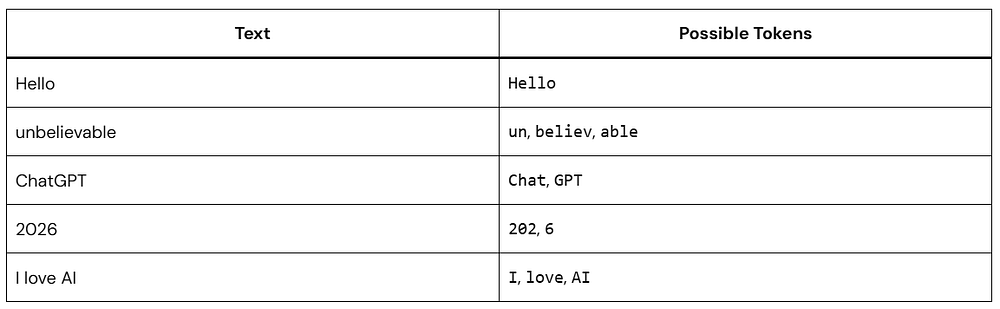
Humans read language as meaning.
Large language models read language as tokens plus patterns.
That distinction changes everything.
Why LLMs Don’t Read Words Like Humans
Humans understand language through experience, memory, and context.
LLMs work differently.
When you type:
“Write an article about climate change.”
The model does not see a sentence.
Internally, it converts text into tokens and then transforms those tokens into numbers.
The process looks roughly like this:
Text
↓
Tokenization
↓
Numeric Representation
↓
Pattern Processing
↓
Prediction
↓
Generated Text
An LLM predicts what token should come next based on everything that came before.
That’s the core mechanism.
Not understanding.
Prediction.
How Text Becomes Tokens
This conversion process is called tokenization.
Tokenization breaks text into pieces that the model can process efficiently.
Imagine this sentence:
Artificial intelligence is changing work.
A tokenizer may produce:
["Artificial"]
[" intelligence"]
[" is"]
[" changing"]
[" work"]
["."]
Notice something important:
Tokens often include spaces.
That helps models preserve natural language structure.
Different LLMs may tokenize the exact same sentence differently.
That means:
- 1,000 words ≠ always 1,000 tokens
- Token counts vary between models
- Pricing can differ even for identical content
Tokenization Explained with Simple Examples
Example 1: Short Words
Input:
I love coffee
Possible tokens:
["I"]
[" love"]
[" coffee"]
Total: 3 tokens
Example 2: Long Words
Input:
internationalization
Possible output:
["inter"]
["national"]
["ization"]
Total: 3 tokens
Long words often become multiple tokens.
Example 3: Numbers
Input:
Revenue grew 18.5%
Possible tokens:
["Revenue"]
[" grew"]
[" 18"]
["."]
["5"]
["%"]
Numbers frequently split unexpectedly.
Example 4: Emoji
Input:
Amazing 🔥
Possible tokens:
["Amazing"]
[" 🔥"]
Emoji consume tokens too.
How LLMs Count Tokens
Token counting is important because models have a maximum amount of information they can process at one time.
When you send a prompt, the total includes:
Input Tokens
+
System Instructions
+
Conversation History
+
Output Tokens
=
Total Token Usage
Example:
Prompt:
Explain machine learning.
Input:
50 tokens
Generated answer:
450 tokens
Total:
500 tokens used
This is why longer conversations gradually consume more context.
Context Windows: Why Token Limits Exist
Every LLM has a context window.
This is the maximum number of tokens it can consider simultaneously.
Example conceptually:
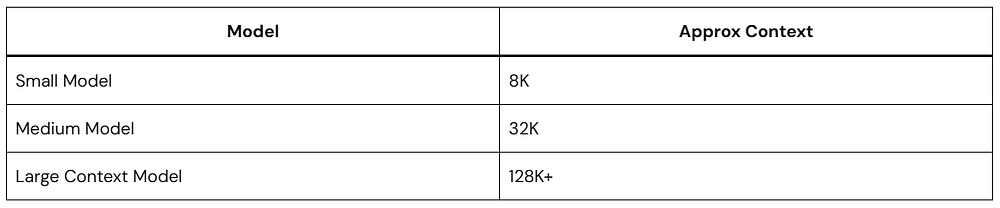
If the conversation exceeds the limit:
- Older content may be removed
- Responses may become inconsistent
- Important instructions may disappear
Think of context like a whiteboard.
Once it fills up, older notes get erased.
How LLMs Actually Process Tokens
Why don’t language models just read full words? If an AI tried to remember every single word in existence — including slang, typos, medical terms, and names — its vocabulary database would be endlessly massive and incredibly inefficient.
On the flip side, reading letter-by-letter (character tokenization) would force the model to look at an overwhelming number of tiny data points, dragging down its processing speed and shrinking how much memory context it can handle.
To solve this, modern systems use Byte Pair Encoding (BPE) (Hayase et al., 2024). This algorithmic technique strikes a balance by keeping common full words intact while splitting rarer phrases into familiar fragments.
Once the text has been tokenized, the model can begin processing those tokens through a series of computational stages.
Step 1: Convert Tokens into IDs
Hello → 1258
world → 3987
Words become numbers.
Step 2: Create Embeddings
Those IDs become mathematical vectors.
Hello → [0.14, -0.62, 0.87...]
These vectors capture relationships.
Words with similar meaning appear closer together.
Step 3: Apply Attention
The model determines:
- Which earlier tokens matter
- Which context is relevant
- What relationships exist
Example:
Sentence:
Sarah dropped the glass because it broke.
The model learns:
it → glass
Attention helps maintain meaning.
Step 4: Predict the Next Token
Given:
The sky is
Possible probabilities:
blue → 81%
clear → 12%
beautiful → 4%
green → 0.2%
The selected token becomes part of the output.
Then the cycle repeats.
Tokens in Code and Programming
Code is tokenized too.
This matters because developers often assume only text consumes context.
Example Python code:
def greet(name):
    return f"Hello {name}"
Possible token breakdown:
def
greet
(
name
)
:
return
f
"
Hello
{name}
"
Even small scripts can become large token counts.
Why this matters for coding assistants
When working with AI coding tools:
- Large files consume context quickly
- Repeated imports increase token usage
- Long comments add overhead
- Structured prompts improve efficiency
For example:
Instead of:
Review my entire application.
Use:
Review authentication.py only.
Focus on security and performance.
Smaller scope often gives better output.
Why Token Efficiency Matters
Understanding Tokens in LLMs helps you write better prompts.
Better Prompt
Summarize this article in 5 bullets.
Clear.
Specific.
Efficient.
Less Efficient Prompt
Can you maybe sort of explain everything
about this article in a lot of detail?
More tokens.
More ambiguity.
Often weaker results.
Token efficiency improves:
- Response quality
- Speed
- Cost
- Context retention
Python Token Counting
Let’s look at how token counting works under the hood using code. OpenAI uses an open-source, highly efficient BPE tokenizer implementation called tiktoken.
Below is a Python script that reveals exactly how an engine like GPT-4o processes a sentence, showing the raw strings alongside their unique token ID values.
import tiktoken

def analyze_text_tokens(text: str, model_encoding: str = "o200k_base"):
    # Load the specific encoder used by modern models like GPT-4o
    encoder = tiktoken.get_encoding(model_encoding)

    # Convert text to a list of token integers
    token_ids = encoder.encode(text)

    # Decode individual tokens back to byte strings to see the breakdown
    byte_tokens = [encoder.decode_bytes([tid]) for tid in token_ids]

    print(f"Original Text: '{text}'")
    print(f"Total Token Count: {len(token_ids)}\n")

    print(f"{'Token ID':<12} | {'Visual Segment':<15}")
    print("-" * 32)
    for tid, b_tok in zip(token_ids, byte_tokens):
        # Convert bytes to string, safely handling spaces and special characters
        visible_str = b_tok.decode('utf-8', errors='replace').replace(" ", "␣")
        print(f"{tid:<12} | {visible_str:<15}")

# Run the analyzer
analyze_text_tokens("Tokenization is brilliant!")


#############################################################

Original Text: 'Tokenization is brilliant!'
Total Token Count: 4

Token ID     | Visual Segment
--------------------------------
38407        | Token
4389         | ization
374          | ␣is
48408        | ␣brilliant!
If you run this code, you will notice that the space before a word often gets bundled straight into the next token (represented here by ␣).
Instead of treating a space as a separate punctuation mark, BPE optimization fuses it directly to the word that follows. This small design choice cuts down the overall token count of a document by up to 20%, keeping processing fast and costs low.
The Business and Cost of Tokens
Understanding Tokens in LLMs isn’t just an academic exercise — it dictates the functional and financial reality of building with AI.
- API Cost Modeling: Commercial AI vendors charge you directly by the token. You are billed for every single token passed into the prompt, plus every token generated in the response.
- The Context Window Limit: Every model has a hard ceiling on its memory capacity, known as the context window. Whether a model has an 8K capacity or a 1M capacity, that boundary is measured entirely in tokens, not words or pages.
- The Multilingual Disparity: Historically, because BPE vocabularies were primarily trained on English data, non-English scripts often faced heavy text fragmentation. A single word in Hindi or Arabic could consume three to four times as many tokens as its English translation, creating higher costs and slower runtimes for global applications. Fortunately, newer architectures are expanding their structural vocabularies to balance this out.
Common Myths About Tokens
Myth 1: One Word Equals One Token
False.
Words often split into multiple tokens.
Myth 2: More Tokens Mean Better Responses
False.
Long prompts can dilute important instructions.
Myth 3: Tokens Only Matter for Billing
False.
Tokens affect:
- Memory
- Context
- Accuracy
- Latency
- Output quality
Myth 4: LLMs Understand Language Like Humans
Not exactly.
LLMs identify statistical relationships between tokens.
That creates surprisingly human-like outputs, but the underlying process is different.
Practical Tips for Working with Tokens
If you regularly use AI tools, these habits help.
1. Keep prompts focused
Remove unnecessary background.
2. Split large tasks
Instead of one huge request:
Write website copy
Create FAQs
Generate SEO metadata
Break it apart.
3. Use structured formatting
Example:
Goal:
Audience:
Constraints:
Output:
Models process structure well.
4. Reduce repeated instructions
Avoid copying the same context repeatedly.
5. Watch long chats
If responses degrade, start a fresh thread.
Frequently Asked Questions
How many words equal one token?
A rough estimate:
- 1 token ≈ ¾ of an English word
- 100 tokens ≈ 75 words
- 1,000 tokens ≈ 750 words
Actual results vary.
Do spaces count as tokens?
Sometimes.
Many tokenizers attach spaces to adjacent text.
Are tokens the same across all LLMs?
No.
Different models use different tokenization systems.
Why do AI tools charge per token?
Because token processing drives compute usage.
More tokens generally require more processing resources.
Conclusion
Understanding Tokens in LLMs changes how you think about AI.
Large language models do not read paragraphs the way humans do. They break text into tokens, convert those tokens into numerical representations, analyze relationships, and predict what comes next.
That single idea explains:
- Why context windows exist
- Why prompts matter
- Why AI pricing is token-based
- Why long conversations sometimes lose focus
- Why efficient prompting improves results
If you work with AI, write prompts, create content, build software, or optimize workflows, learning how Tokens in LLMs work is one of the highest-leverage concepts you can understand.
The better you understand tokens, the better you can communicate with modern AI systems.