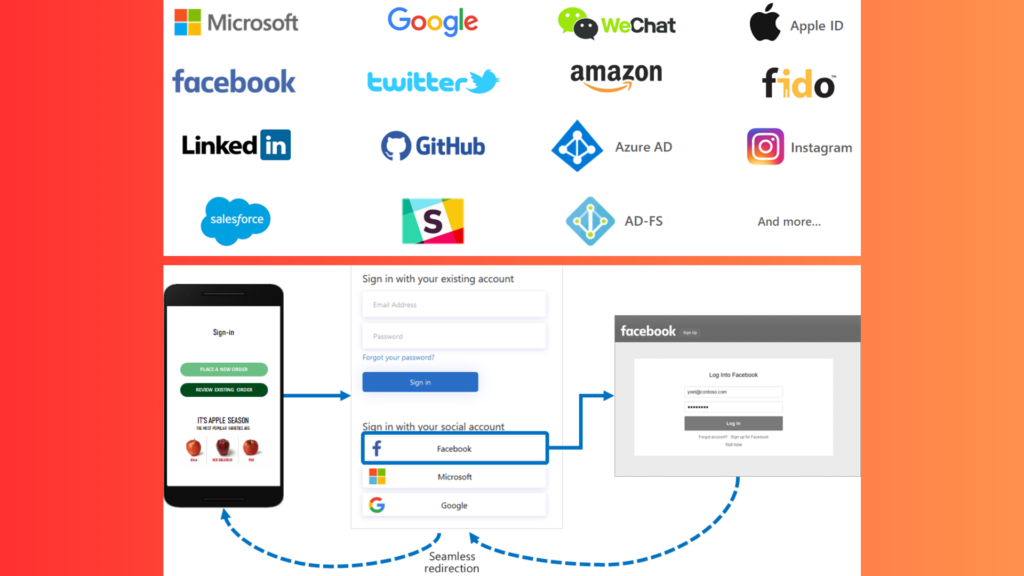
In today’s digital age, ensuring secure and seamless access to online services is more critical than ever. Identity Providers (IDPs) play a pivotal role in this process by managing user identities and facilitating authentication across multiple platforms. This blog delves into the intricacies of IDPs, exploring their functionalities, benefits, and importance in the modern digital ecosystem.
What is an Identity Provider (IDP)?
An Identity Provider (IDP) is a system or service that creates, manages, and verifies user identities for authentication and authorization purposes. IDPs are integral to Single Sign-On (SSO) systems, enabling users to log in once and gain access to multiple services without needing to re-enter credentials.
Key Functions of an IDP
Authentication: IDPs validate that users are who they claim to be, typically through username and password verification, multi-factor authentication (MFA), biometrics, or other authentication methods.
Authorization: Once authenticated, IDPs determine what resources and services the user is permitted to access based on predefined roles and permissions.
User Management: IDPs handle the creation, updating, and deletion of user accounts, ensuring that user information is accurate and up-to-date.
Federation: IDPs enable identity federation, allowing users to use a single identity across multiple domains and services, often through protocols like SAML (Security Assertion Markup Language) or OAuth.
How IDPs Work
The operation of an IDP can be broken down into several key steps:
User Request: A user attempts to access a service or application.
Redirection: The application redirects the user to the IDP for authentication.
Authentication: The IDP prompts the user for credentials or another form of authentication.
Validation: The IDP validates the credentials and, if successful, generates an authentication token.
Token Exchange: The IDP sends the authentication token back to the application.
Access Granted: The application verifies the token and grants the user access.
Benefits of Using an IDP
Improved Security: By centralizing authentication, IDPs reduce the risk of password-related breaches and support advanced security measures like MFA.
User Convenience: Users benefit from SSO, which minimizes the need to remember multiple passwords and simplifies the login process.
Cost Efficiency: Organizations can reduce costs associated with managing multiple authentication systems and streamline IT support.
Scalability: IDPs can easily scale to accommodate growing user bases and integrate with new services.
Regulatory Compliance: IDPs help organizations comply with data protection regulations by ensuring secure and consistent user authentication practices.
Popular Identity Providers
Several well-known IDPs dominate the market, each offering unique features and capabilities:
Auth0: Known for its developer-friendly platform and extensive customization options.
Okta: Popular for its robust SSO capabilities and comprehensive identity management solutions.
Microsoft Azure AD: Widely used in enterprise environments, offering seamless integration with Microsoft services.
Google Identity: Integrates well with Google Workspace and other Google services, providing a straightforward user experience.
Ping Identity: Focuses on enterprise-level identity management and security.
IDP Protocols and Standards
IDPs rely on established protocols and standards to ensure secure and interoperable authentication:
SAML (Security Assertion Markup Language): An XML-based standard for exchanging authentication and authorization data between parties.
OAuth: An open standard for access delegation, commonly used for token-based authentication.
OpenID Connect: An identity layer on top of OAuth 2.0, used for verifying user identities and obtaining basic user profile information.
LDAP (Lightweight Directory Access Protocol): A protocol for accessing and maintaining distributed directory information services.
Challenges and Considerations
While IDPs offer numerous benefits, they also present certain challenges:
Complexity: Implementing and managing an IDP can be complex, especially for organizations with diverse IT environments.
Cost: Depending on the provider and the level of service required, costs can vary significantly.
Privacy Concerns: Centralizing user identities can raise privacy concerns if not managed properly, particularly regarding data storage and access.
Future Trends in Identity Management
As digital transformation accelerates, several trends are shaping the future of identity management:
Decentralized Identity: Leveraging blockchain technology to create self-sovereign identities that users control independently of any central authority.
AI and Machine Learning: Enhancing security by detecting anomalous behavior and improving fraud detection.
Passwordless Authentication: Moving towards more secure and user-friendly authentication methods that eliminate the need for passwords, such as biometrics and hardware tokens.
Adaptive Authentication: Implementing dynamic authentication processes that adjust based on the user’s context and risk level.
Conclusion
Identity Providers are the linchpin of secure and efficient digital authentication. They offer robust solutions for managing user identities, enhancing security, and simplifying access to online services. As the digital landscape continues to evolve, IDPs will play an increasingly critical role in ensuring seamless and secure user experiences. Organizations must carefully evaluate their identity management needs and choose the right IDP to stay ahead in the ever-changing digital world.
The smartphones we rely on today seem like magic little devices, but their history is surprisingly recent. And a big player in that story? Android. Let’s take a trip down memory lane and explore how this open-source operating system went from a camera concept to the king of mobile.
Brewing in the Cauldron: 2003-2005
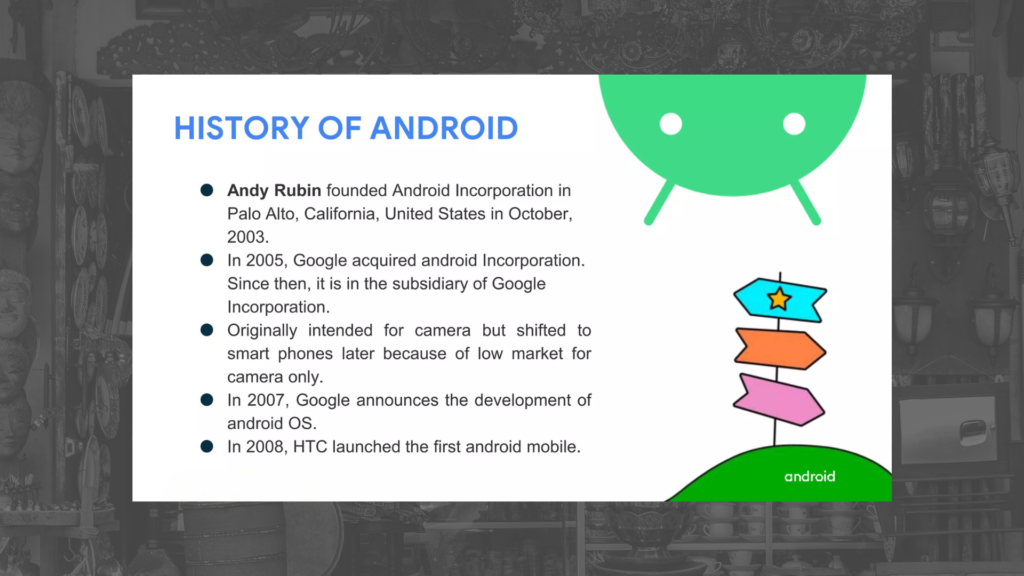
The story starts in 2003 with a company called Android Inc. led by Andy Rubin (nicknamed “Android” for his love of robots). Their initial goal? An operating system for digital cameras! Imagine a camera that could be more than just a point-and-shoot – that was the dream. But the market for super-smart cameras just wasn’t there, so they pivoted. In 2005, Google came knocking, recognizing the potential of this mobile OS and acquiring Android Inc. Suddenly, the little camera OS had the backing of a tech giant, and its destiny changed.
Going Open Source: 2007-2008
Google ditched the camera idea and focused on smartphones. A bold move was made: basing Android on the Linux kernel, an open-source software foundation. This meant anyone could tinker and create with Android, fostering a spirit of collaboration. In 2007, the Open Handset Alliance (OHA) was formed, a group of tech companies including HTC, Samsung, and LG who would help develop and promote this new OS.
The first test balloons were released – developer previews – to gather feedback and build excitement. Finally, in 2008, the world saw the first commercially available Android phone: the HTC Dream, also known as the T-Mobile G1 in the US. It wasn’t perfect – chunky design, limited app selection – but it was a start. More importantly, it was open, customizable, and offered a glimpse of the future.
The Rise of the Machines (and Apps): 2009-2011
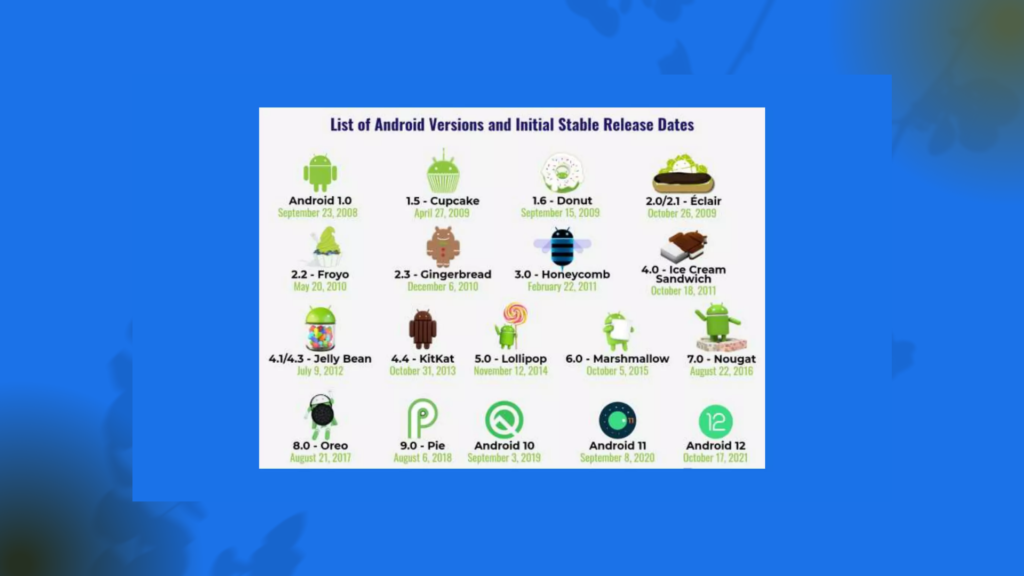
The next few years were a whirlwind of updates. Each version, creatively named with a delicious dessert theme (Cupcake, Donut, Eclair!), brought new features and functionalities. The app store, then called the Android Market (now Google Play Store), exploded with possibilities. Users could personalize their phones like never before, from adding games and social media apps to productivity tools and messaging services.
Manufacturers like Samsung and Motorola jumped on board, creating a wave of Android-powered devices with different screen sizes, features, and price points. This variety gave consumers more choice and helped Android gain ground against competitors like Apple’s iOS.
Maturity and Domination: 2011-Present
By the early 2010s, Android had become the dominant mobile OS. Updates became more streamlined, with a focus on improving performance, design, and security. Features like voice assistants (hello, Google Assistant!), multi-tasking, and better camera integration became commonplace.
Today, Android runs on billions of devices around the world. It’s constantly evolving, with new versions offering features like foldable displays and smarter AI integration. The open-source spirit remains strong, with developers constantly pushing the boundaries of what’s possible.
The Future of Android
So, where does Android go from here? The future is full of possibilities. We might see even more integration with artificial intelligence, seamless connections between devices, and a focus on user privacy and security. One thing’s for sure: the little camera OS that could has become a mobile giant, and its story is far from over.
Exception handling is a critical aspect of Java programming that allows developers to gracefully manage errors and unexpected situations in their code. Java provides a robust mechanism for handling exceptions, which is essential for writing reliable and maintainable applications. In this guide, we’ll explore exception handling in Java in depth, covering various aspects including types...
Multithreading is a programming concept that enables simultaneous execution of multiple threads within a process, allowing for better resource utilization and improved performance. In recent years, advancements in hardware and software technologies have led to significant enhancements in multithreading techniques. In this blog, we’ll delve into the latest multithreading enhancements and their implications for software development.
Thread Group: First Multithreading Enhancements
Based on functionality, we can group a thread into a single unit, which is nothing but a thread group. That is, a thread group contains a group of threads. In addition to threads, a thread group also contains sub-thread groups.
The main advantage of maintaining threads in the form of thread groups is that we can perform common operations easily.
Every thread in Java belongs to some group. The main thread belongs to the main group. Every thread group in Java is a child group of the system group, either directly or indirectly. Hence, the system group acts as the root for all thread groups in Java. The system group contains several system-level threads like finalizer, reference handler, signal dispatcher, and attach listener.
Java
classTest {publicstaticvoidmain(String[] args) {System.out.println(Thread.currentThread().getThreadGroup().getName()); // Output: main System.out.println(Thread.currentThread().getThreadGroup().getParent().getName()); // System// main thread main ThreadGroup System TG System }}
Here, “main thread” belongs to “main ThreadGroup,” and “System ThreadGroup” belongs to “System.”
Thread Group Constructors
ThreadGroup is a Java class present in the java.lang package and is a direct child class of Object.
Constructors:
Java
ThreadGroupg = newThreadGroup(String gName);// Example usage:ThreadGroupg = newThreadGroup("First Group");
This constructor creates a new thread group with the specified name. The parent of this new group is the thread group of the currently executing thread.
Java
ThreadGroupg = newThreadGroup(ThreadGroup tg, String groupName);// Example usage:ThreadGroupg1 = newThreadGroup("First Group")System.out.println(g1.getParent().getName()); // mainThreadGroupg2 = newThreadGroup(g1, "Second Group");System.out.println(g2.getParent().getName()); // First Group
This constructor creates a new thread group with the specified group name. The parent of this new thread group is the specified parent group.
In the above example, the parent group for “Second Group” is explicitly set to “First Group,” demonstrating the flexibility of this constructor.
Thread Group Methods
Various methods present in ThreadGroup:
String getName(): Returns the name of the ThreadGroup.
int getMaxPriority(): Retrieves the maximum priority of the thread group.
void setMaxPriority(int priority): Sets the maximum priority of the thread group. The default maximum priority is 10. Threads in the thread group that already have a higher priority won’t be affected, but for newly added threads, this maximum priority is applicable.
ThreadGroup getParent(): Returns the parent group of the current thread group.
void list(): Prints information about the thread group to the console.
int activeCount(): Returns the number of active threads present in the thread group.
int activeGroupCount(): Returns the number of active thread groups present within the current thread group.
int enumerate(Thread[] t): Copies all active threads of this thread group into the provided Thread[] array. This includes threads from sub-thread groups.
int enumerate(ThreadGroup[] g): Copies all active sub-thread groups into a ThreadGroup[] array.
boolean isDaemon(): Checks whether the thread group is a Daemon or not.
void setDaemon(boolean daemon): Sets the Daemon nature of the current thread group.
void interrupt(): Interrupts all waiting or sleeping threads present in the thread group.
void destroy(): Destroys the thread group and its sub-thread groups.
java.util.concurrent package
Problems with traditional synchronized keyword
Let’s first see the problems with the traditional synchronized keyword, then we will look at enhancements
The problems with the traditional synchronized keyword are:
Lack of Flexibility: There is no flexibility to attempt for locks without waiting.
Absence of Time Constraints: There is no way to specify the maximum waiting time for a thread to acquire a lock. Threads may wait indefinitely for a lock, potentially leading to performance problems or deadlock situations.
Lack of Control Over Lock Acquisition: When a thread releases a lock, there is no control over which waiting thread will acquire that lock next.
No API for Listing Waiting Threads: There is no API available to list out all waiting threads for a lock.
Limitation in Usage Scope: The synchronized keyword must be used either at the method level or within a method, and it’s not possible to use it across multiple methods.
To address these issues, the creators introduced java.util.concurrent.locks in version 1.5. This package provides several enhancements to programmers, offering more control over concurrency.
The Lock interface
Lock object is similar to the implicit lock acquired by a thread to execute a synchronized method or synchronized block. Lock implementations provide more extensive operations than traditional implicit locks.
Important methods of the Lock interface:
Java
voidlock()
We can use this method to acquire a lock. If the lock is already available, then the current thread will immediately get that lock. If the lock is not available, then it will wait until obtaining the lock. It exhibits the same behavior as the traditional synchronized keyword.
Java
booleantryLock()
Attempts to acquire the lock without waiting. If the lock is available, the thread acquires the lock and returns true. If the lock is not available, the method returns false, and the thread can continue its execution without waiting. In this case, the thread never enters a waiting state.
Java
if (lock.tryLock()) {// Perform safe operations} else {// Perform alternative operations}
boolean tryLock(long time, TimeUnit unit)
Java
booleantryLock(long time, TimeUnit unit)
If the lock is available, the thread will get the lock and continue its execution. If the lock is not available, then the thread will wait until the specified amount of time. If the lock is still not available after the specified time, the thread can continue its execution. TimeUnit: An enum present in the java.util.concurrent package.
Java
if (lock.tryLock(1000, TimeUnit.MILLISECONDS)) {// Perform safe operations}
void lockInterruptibly(): Acquires the lock if it is available and returns immediately. If the lock is not available, it will wait. While waiting, if the thread is interrupted, it won’t get the lock.
void unlock(): To call this method, the current thread should be the owner of the lock; otherwise, a runtime exception IllegalMonitorStateException will be thrown.
ReentrantLock
It is an implementation class of the Lock interface and is a direct child class of Object.
Reentrant means a thread can acquire the same lock multiple times without any issue. Internally, ReentrantLock increments the thread’s personal count whenever we call lock methods and decrements the count value whenever the thread calls the unlock method. The lock will be released whenever the count reaches zero.
Creates a ReentrantLock with the given fairness policy. If fairness is set to true, then the longest waiting thread will get the lock if it is available, following a first-come-first-serve policy. If fairness is set to false, the selection of the waiting thread is not guaranteed.
Which of the following declarations are equal?
ReentrantLock l = new ReentrantLock();
ReentrantLock l = new ReentrantLock(true);
ReentrantLock l = new ReentrantLock(false);
The first and third declarations are equal.
Important methods of ReentrantLock:
(Comes from the Lock interface)
void lock()
boolean tryLock()
boolean tryLock(long l, TimeUnit t)
void lockInterruptibly()
void unlock()
Extra methods:
int getHoldCount(): Returns the number of holds on this lock by the current thread.
boolean isHeldByCurrentThread(): Returns true if the lock is held by the current thread.
int getQueueLength(): Returns the number of threads waiting for the lock.
Collection getQueuedThreads(): Returns a collection of threads that are waiting to acquire the lock.
boolean hasQueuedThreads(): Returns true if any thread is ready to acquire the lock.
boolean isLocked(): Returns true if the lock is acquired by the same thread.
boolean isFair(): Returns true if the fairness policy is set to true.
Thread getOwner(): Returns the thread that acquired the lock.
Thread Pools (Executor Frameworks)
Creating a new thread for every job may lead to performance and memory problems. To overcome this, we should use a thread pool. A thread pool is a pool of already created threads ready to execute our jobs. Java 1.5 introduced the Executor Framework to implement thread pools.
We can submit a Runnable job using the submit method, e.g., service.submit(job);.
Java
service.submit(job);.
We can shutdown the ExecutorService by using shutdown(), e.g., service.shutdown();.
Java
service.shutdown();.
Callable and Future
In the case of a Runnable job, the thread won’t return anything after completing its job. If a thread is required to return some result after execution, then we should use Callable. The Callable interface contains only one method, call(). If we submit a Callable object to the executor, then after completing the job, the thread returns an object of type Future. The Future object can be used to retrieve the result from the Callable job.
Runnable vs Callable
Runnable:
If a thread is not required to return anything after completing a job, then we should use Runnable.
The Runnable interface contains only one method, run().
A Runnable job does not return anything; hence, the return type of run() is void.
Within the run method, if there is any chance of a raised checked exception, we must handle it using try-catch because we can’t use the throws keyword with the run method.
The Runnable interface is present in the java.lang package.
Introduced in version 1.0.
Callable:
If a thread is required to return something after completing a job, then we should use Callable.
The Callable interface contains only one method, call().
A Callable job is required to return something, and hence the return type of the call method is object.
Inside the call method, if there is any chance of raising a checked exception, we are not required to handle it using try-catch because the call method already throws exceptions.
The Callable interface is present in the java.util.concurrent package.
Introduced in version 1.5.
ThreadLocal
The ThreadLocal class provides thread-local variables. The ThreadLocal class maintains values on a per-thread basis. Each ThreadLocal object maintains a separate value for each thread that accesses that object. Threads can access their local value, manipulate its value, and even remove its value. In every part of the code executed by a thread, we can access its variable.
For example, consider a servlet that invokes some business methods. We have a requirement to generate a unique transaction ID for every request, and we have to pass this transaction ID to the business methods. For this requirement, we can use ThreadLocal to maintain a separate transaction ID for every request, i.e., for every thread.
Once a thread enters into a dead state, all its local variables are by default eligible for garbage collection.
This allows for safe, efficient handling of thread-specific data without worrying about synchronization issues or interference from other threads. It ensures that each thread operates with its own set of data, isolated from other threads.
Conclusion
Multithreading enhancements are ongoing, driven by the need for faster, more responsive, and scalable software. These advancements improve concurrency, performance, debugging, and security, making multithreading a powerful and versatile tool for modern software development. As hardware and software continue to evolve, we can expect even more innovative and efficient multithreading techniques to emerge in the future.
In multi-threaded programming, communication between threads is essential for coordinating their activities and sharing data. Inter-thread communication in Java refers to the mechanisms through which threads communicate with each other to synchronize their actions or exchange data. This communication enables threads to work cooperatively towards achieving a common goal. In this blog, we will explore...
In the realm of concurrent programming, synchronization plays a crucial role in ensuring thread safety and preventing race conditions. In Java, where multithreading is a fundamental feature, understanding synchronization mechanisms is essential for writing robust and efficient concurrent applications. In this comprehensive guide, we will delve into the intricacies of synchronization in Java threads, exploring...
Threads are the lifeblood of concurrent programming in Java, enabling multiple tasks to execute seemingly simultaneously, enhancing the performance of applications by utilizing the available processing power efficiently. Understanding thread constructors and methods is crucial for effectively creating, managing, and synchronizing threads in your applications. In this blog post, we’ll delve into the various constructors...
In the realm of software development, multithreading emerges as a powerful tool for building applications that can execute multiple tasks seemingly concurrently, enhancing responsiveness and performance. Java, a widely used language, offers robust support for multithreading through its Thread class and Runnable interface. Multithreading in Java is a powerful feature that allows concurrent execution of...
In the realm of Java programming, efficient memory management is crucial for optimizing performance. One of the lesser-known yet powerful techniques employed by Java to conserve memory is string interning. String interning is a mechanism that allows multiple string objects with the same value to share the same memory location, thus reducing memory footprint and...
Java, being an object-oriented programming language, allows developers to create and manipulate objects. In many cases, you might encounter a situation where you need to create a copy of an existing object. This process of creating an exact copy of an object is called object cloning. Understanding object cloning in Java is essential for various...